


















Editorial/OP-ED
Opinion | Is Homework Necessary for Student Success?



To the Editor:
Re “The Movement to End Homework Is Wrong,” by Jay Caspian Kang (Sunday Opinion, July 31):
Finland proves that you don’t need homework for education success. Students there have hardly any homework, and it has one of the top education systems in the world. In America, there is ample time for students to do in class what is now assigned as homework.
Whether a student attends an expensive private school, an underserved public school or something in between, being burdened with hours of additional work to do after school unnecessarily robs them of time for play, introspection, creative thinking, relaxation and intellectual growth.
Mr. Kang regards the demonstration of diligence and personal responsibility as an important raison d’être of homework. He sees schools as places where students can distinguish themselves and pursue upward mobility. But ranking students on homework production favors students with quiet places to go home to, good Wi-Fi, and access to tutors and parents who can provide help. In other words, it favors students of higher socioeconomic status.
It follows that making homework an important part of a student’s evaluation perpetuates both educational inequalities and the myth of meritocracy. A first step toward improving our educational system is indeed the abolition of homework.
Dorshka Wylie
Washington
The writer is an assistant professor of mathematics at the University of the District of Columbia.
To the Editor:
Homework’s value is unclear for younger students. But by high school and college, homework is absolutely essential for any student who wishes to excel. There simply isn’t time to digest Dostoyevsky if you only ever read him in class.
In both my own education and my 20-year career as an educator, I’ve observed that those students who spend the most time on homework tend to learn the most and earn the best grades. And this is no less true for athletes and musicians. Top performers have often spent far more time perfecting their crafts than their lesser competitors.
This isn’t to deny natural talent or to suggest that everybody starts from the same spot, but it is to say that what matters most is putting in the hours. As Jay Caspian Kang notes, “Kids need to learn how to practice things.”
Justin Snider
New York
The writer is an assistant dean at Columbia University, where he also teaches undergraduate writing.
To the Editor:
In my own practice as a high school mathematics teacher, I explored why students were not doing homework in certain classes and discovered that many of them were having difficulty doing the problems. When I “flipped” my classroom, I started assigning simple introductory videos for homework and doing the harder problems in class.
Students get credit for watching and doing the problems in the video. Then in class, they are better prepared to work on more difficult problems. This significantly increased the percentage of homework doers.
In other cases, I create an after-school “homework clinic” where I can guide students in how to approach the work, and how to judge if they have done enough. Sometimes groups of students come together to a homework clinic and enjoy helping one another.
I don’t think about homework as something that must be done “at home”; I think of it as an opportunity for a student to work independently, and to explore and practice new ideas.
This is one approach to improving equity without lowering cognitive demand.
Joyce Leslie
Highland Park, N.J.
To the Editor:
Telling students that “a lot of work you’re going to end up doing in your life is pointless” is an absurd justification for repetitive, mindless homework.
Allen Berger
Savannah, Ga.
The writer is emeritus professor of reading and writing at Miami University (Ohio).
To the Editor:
I see why Jay Caspian Kang can’t imagine a school that could educate children well without relying on homework, ranking, sorting and other trappings of meritocracy. Most people in our society have never seen such a thing. But some schools do provide a rigorous education that strengthens personal responsibility and skill mastery without emphasizing who is better than whom — and even without homework.
To see this in action, I encourage Mr. Kang to visit any of the powerful public Montessori schools serving low-income communities across our nation. And yes, many Montessori schools take a minimal approach to homework. Instead, they make time for children to struggle with challenging concepts and independently practice new skills during the school day.
Annie Frazer
Decatur, Ga.
The writer is executive director of Montessori Partnerships for Georgia.
To the Editor:
I agree with Jay Caspian Kang that one value of homework is for a student to independently practice a skill until mastery, and I recognize the issue of equity when homework is assessed for students from “disadvantaged” homes. However, there is another important benefit to homework that can bolster social mobility.
Homework gives students the opportunity to practice responsibility, which arguably is an important “soft skill” that will pay off later in the work force. In the classroom, students practice compliance: doing what the teacher says. Homework provides students with agency to practice time management (remembering to do a task and making time to do it) and materials management (taking home the right notebook and bringing it back on time).
To ensure an equal playing field, teachers can directly teach these skills by providing strategies to students who may not have adults at home to do so. Schools can further support students by providing unstructured time for students to do this homework independently with supervision (free period, study hall, after school, etc.). Learning responsibility should be the fourth R.
Barbara Richman
Hawthorne, N.Y.
Read the full article here






(BALTIMORE – April 4, 2026) – This is my contribution to the Black press — an institution I love and adore.
Not an institution that began in America. An institution whose roots go back before Freedom’s Journal — to the earliest Black newspapers in Sierra Leone and Haiti. To the Afro-Latino journalists of Cuba, Puerto Rico, and Brazil who wrote in Spanish, Portuguese, and Creole — voices too often excluded when we tell the story of the Black press through an English-speaking lens alone.
But across every language, every country, every century, those publishers shared one thing: they were fighting for liberation. Fighting for freedom. Fighting for equality.
And they did it by building their own press — because the mainstream press could not be trusted to tell their story. It ignored them. Overlooked them. And often did so intentionally.
That is the purpose of the Black press. It always has been.
By the time Samuel Cornish and John Brown Russwurm launched Freedom’s Journal in New York City in 1827 and declared “too long have others spoken for us,” Black people had already been building their own press for generations — across continents, across languages, across the diaspora.
That tradition is what I stand in today.
And BlackUSA.News is the next chapter in that story.
107 Years After Claude Barnett, We Built the Upgrade
In 1919, Claude Barnett built the Associated Negro Press — a wire service created because Black America was invisible in the mainstream press.
For decades, it worked. Black newspapers thrived. Black stories moved. Black voices reached Black people on their own terms.
Then the landscape shifted.
The internet came. Social media followed. And a new kind of gatekeeper emerged — one you couldn’t see, couldn’t negotiate with, and couldn’t appeal to.
It worked in code.
107 years after Barnett built his infrastructure, we built ours.
The Problem Nobody Wants to Name
Let me tell you something about BMORENews.com.
We’ve been publishing since August 9, 2002. We have over 8,200 videos. We’ve covered governors, mayors, presidential campaigns. We’ve made more than 60 visits to the White House.
We’ve documented Black Baltimore in ways no one else has.
And I can prove our content resonates.
When we published Albert Perry — viral.
Damian O’Doherty speaking on Black communities — viral.
Pleasant Yacht Club — viral.
Dwight Braxton, Muhammad Qawi — viral.
Every time our content reaches people, the people respond.
So why do we have fewer than 10,000 YouTube subscribers?
That gap has a name:
algorithmic precarity.
The systematic suppression of independent Black digital media by platforms that profit from our content while limiting our reach — invisibly, without explanation, and without recourse.
I’ve lived it.
In 2020, our Facebook page was deleted.
211,000 followers. Gone.
No warning. No explanation. No appeal.
Years of community, trust, and history — erased by a system that answers to no one.
That is not a glitch.
That is a pattern.
And the mainstream press is not coming to save us.
We have to save ourselves.
The Existential Threat Is Real
We don’t have to look far for proof.
In February 2026 — just weeks ago — two of the most respected Black newspapers in America shut down in the same month.
The Richmond Free Press (founded 1992) closed after 34 years.
The Skanner (founded 1975) closed after 50.
The reason was simple: advertising moved to digital platforms.
Nearly 40% of all U.S. local newspapers have disappeared since 2005. Over 130 closed in the past year alone.
When revenue collapses, Black and independent outlets feel it first — because we rarely have corporate backing, large reserves, or margin for error.
This is not a future threat.
It is already here.
The Only Viable Solution
The answer is not individual survival.
It is collective strategy.
Not every outlet scrambling alone. Not every publisher begging the algorithm.
Together.
As a coalition. As a press corps. As a people.
But coalition alone is not enough.
We must adapt:
- Master video
- Build multi-platform strategies
- Meet audiences where they are
And we must prepare the next generation.
They bring digital fluency.
We bring institutional memory.
Neither can do this alone.
Black media needs both — working together — to survive what’s coming.
What We Built
BlackUSA.News — powered by Vizzible — is that answer.
Think of it as a modern wire service. A national aggregation platform bringing together Black digital journalism — independent, legacy, and emerging — in one place.
It is not a directory.
It is not a link list.
It is a living system.
A real-time content carousel pulling stories from across the country.
A platform designed to increase visibility while strengthening the ecosystem.
This is infrastructure.
And it is long overdue.
What Separates Us from the Pack
We are not venture-backed.
We are not investor-controlled.
BlackUSA.News is independently built — owned by the community it serves.
No boardroom influence.
No equity pressure.
No editorial compromise.
That independence is not a detail.
It is the foundation.
Why This Is Historic
The National Newspaper Publishers Association — through BlackPressUSA.com — serves the traditional Black press. That work matters.
But it was not built for the digital-native publisher.
The one who built on Facebook… lost reach.
Moved to YouTube… lost visibility.
Adapted again… and kept going.
That publisher had no home.
Until now.
107 years after Claude Barnett built what didn’t exist — we did the same.
The difference is this:
He fought exclusion.
We are fighting invisibility engineered through code.
BlackUSA.News breaks that dependency.
This Is Just the Beginning
I am currently pursuing a doctoral degree at the University of Maryland’s Robert H. Smith School of Business, where my research focuses on the algorithmic suppression of independent Black media.
BlackUSA.News is not separate from that work.
It is the proof of concept.
And to every Black publisher reading this:
You are not imagining it. The suppression is real.
And we are building the alternative.
From Sierra Leone to Haiti.
From Freedom’s Journal to the Associated Negro Press.
From BMORENews.com to BlackUSA.News.
We have always built our own infrastructure.
We have always told our own story.
And we always will.
The Black press was born out of liberation.
And in 2026—
liberation is digital.
BlackUSA.News is live.
The coalition is forming.
The carousel is running.
Claude Barnett would recognize exactly what this is.
And I think he’d say:
It’s about time.
Doni Glover is the founder and CEO of DMGlobal Marketing & Public Relations, LLC, publisher of BMORENews.com, host of the Emmy-nominated Doni Glover Show on WMAR-TV 2, and a DBA candidate at the University of Maryland’s Robert H. Smith School of Business. He is the author of four books: Unapologetically Black, I Am Black Wall Street, Journapreneur, and Black Blueprint: Baltimore to Burkina Faso.
BlackUSA.News is available now at BlackUSA.News.
(BALTIMORE – August 8, 2025) – The Center for American Women and Politics (CAWP) recently dropped a timeline highlighting major milestones in U.S. women’s political history — from Seneca Falls to Kamala Harris. It’s long, detailed, and well-produced.
But let’s keep it real: it’s incomplete.
And this is personal for me — not because I’m a woman.
I’m a man. A Black man.
And as a journalist, publisher, and student of history, I have a responsibility to call it like I see it.
What I see is a whole lot of celebration for white women’s progress — and not nearly enough credit given to the Black women who’ve been leading, building, organizing, and risking it all from day one.
Where’s Sojourner Truth, who stood up in 1851 and demanded the world answer: “Ain’t I a Woman?”
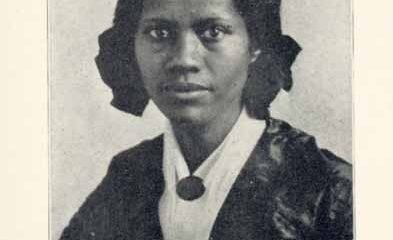
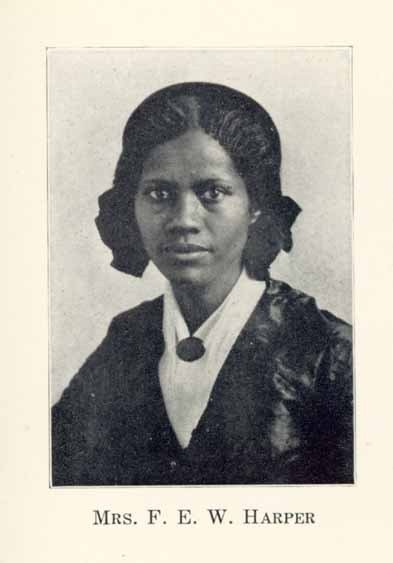
Where’s Frances Ellen Watkins Harper, a Baltimore legend who confronted white women suffragists with truth and grace?
Where’s Ida B. Wells, who stared racism in the face and built her own organizations when others tried to silence her?
And how do you miss Frances Ellen Watkins Harper — a Baltimore-born powerhouse who was one of the first Black women to publish a book in the U.S. and who addressed the 1866 National Women’s Rights Convention with a message that still resonates? Raised and educated in Baltimore at her uncle’s Watkins Academy for Negro Youth, Harper’s early years in this city shaped the moral clarity and courage that defined her national work. She’s not a side note. She’s a cornerstone.
You mean to tell me there’s a 48-year gap between the 19th Amendment and the first meaningful mention of a Black woman in elected office? That’s not an oversight. That’s historical malpractice.
Black women have always been in the fight.
They didn’t wait to be invited. They didn’t ask for permission. They created their own lanes — from the Black women’s clubs of the 19th century to the organizing of the Civil Rights Movement to the halls of Congress today.
And while others were patting themselves on the back, Black women were doing the work.
I’m not speaking for them — I’m standing beside them.
And I’ll use every mic I’m handed to make sure their names, their labor, and their leadership are never erased. Because Black women didn’t just join the movement.
They moved the movement. And BlackUSA.News will always make sure the world knows it. 
📍 Watch LIVE on LinkedIn, YouTube, and Facebook
(BALTIMORE – August 2, 2025) – Greetings. 你好. Namaste. Hola. Bonjour. Salaam alaikum. Nomoshkar. Olá. Shalom. Здравствуйте.
I come to you humbly and respectfully to say this: most of the people I know and live among are nothing like President Donald Trump.
From where I stand, I imagine much of the world watches in disbelief as this man — and those aligned with him — continue to dismantle civil rights protections, gut healthcare programs like Medicaid, and insult global allies without remorse. It’s disheartening, shameful, and dangerous.
And yet, here we are.
Even after years of evidence — his public misogyny, the racism, the cruelty, the lies — millions still voted for him. Only now, with democracy in crisis and global trust fractured, are some Americans having what we call a “come-to-Jesus moment.”
That’s what we call cognitive dissonance: when someone knows the truth but refuses to fully accept its consequences.
Around the world, cultures may differ, but many share a basic value: respect. It costs nothing — but means everything.
I felt that truth in my bones when I watched Vice President J.D. Vance berate Ukrainian President Volodymyr Zelenskyy in front of the global press. I was sickened. The disrespect was not only unnecessary — it was classless.
I wasn’t raised like that. And neither were many of the good people I know across this country.
To be honest, I think the group most manipulated in all this were white women voters. They knew who Trump was. The video clips, the criminal allegations, the “grab ‘em” tape — it was all out there. But still, many chose him over Kamala Harris, a competent and qualified leader.
Was it the trauma of having had a Black president for eight years that made the idea of a Black woman too much to bear? Maybe. But it’s worth asking.
America has never truly reconciled with its original sin: slavery and the structural racism that followed. And now we have a president who canceled MLK Day, who mocked a teenage climate activist on the world stage, and whose wife often appears unwilling to even fake a smile beside him.
Let us not forget: this is the man who incited a violent insurrection on January 6th, 2021.
Dear world, please know this: America is better than what you’re seeing right now.
As my mother always said, “Nobody is better than you, and you are no better than anyone else.” That’s the kind of America I believe in — not one built on ego and profit, but on humility and shared dignity.
Still, we live in a society where your bank account defines your worth, where kindness is seasonal, and where too often, decency gets buried under division.
But where I come from — Baltimore — we still learn respect. At home, in the streets, in school. You give it, you get it. You don’t give it, you learn the hard way.
That’s the American spirit I stand for. That’s the America I want the world to know.
So no, we are not all like Trump. And many of us are doing everything we can to keep our country from falling deeper into that abyss.
Wishing you peace in the midst of this storm.
‘Til next time,
Doni Glover

Deadline Aug. 5: Center for Black Entrepreneurship Opens Paid Internship Program for AUC Students

N.C. A&T to Host 100th Greatest Homecoming on Earth Virtual News Conference on Friday

BlackUSA.News Unveils New National Platform Connecting Readers to America’s Leading Black Media

Gospel Legend Calvin Bridges Celebrates 50 Years of ‘I Can Go to God in Prayer,’ a Song That Helped Shape Black Gospel Music

Crawford Family Donates $2 Million to Spelman and Morehouse to Expand Opportunity for HBCU Students

Remember Who You Are: The Indigenous Series

Remember Who You Are: The Indigenous Series 📱

Indigenous Series: Reclaiming Our Legacy

Indigenous Series: Reclaiming Our Legacy 📱

Indigenous Series: Save Our Legacy 📱
-

 News1 year ago
Voices of West Tampa: District 5 Special Election Forum, Aug. 27th
-
 HBCU1 year ago
Lincoln University’s Vice President and General Counsel Venus D. Boston Appointed to National Legal Board
-

 Videos2 years ago
New Life Recovery Program: Rev. Terry Thornton
-
 Videos2 years ago
New Life Recovery Show: Bro. Curtis Warren, Brothers Helping Brothers
-

 Videos2 years ago
Emmy-nominated Doni Glover Show: Serial Entrepreneur Lance London
-
 Videos3 years ago
Emmy-nominated Doni Glover Show: NC's Dr. Eric Kelly
-
 Videos2 years ago
Emmy-nominated Doni Glover Show: Barry Williams for Balto. Co. Exec
-

 Black Wall Street1 year ago
Mandy Bowman and the Rise of Black Women in Business: A Testament to Tenacity and Transformation