


























News
A Time for War, a Time for Play

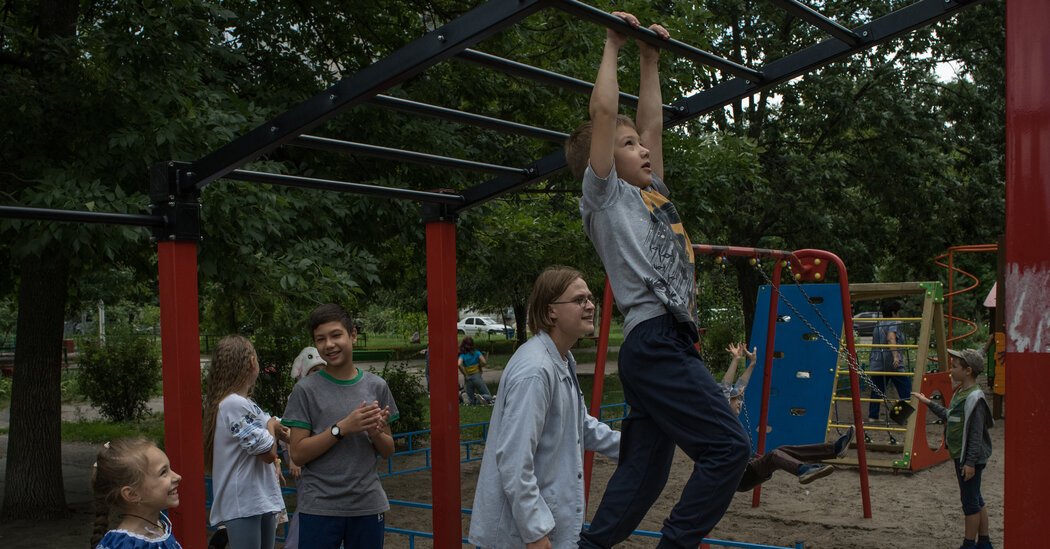

A late-July morning, and the sounds of the summer camp were the sounds of summer camps everywhere as children raced from activity to activity.
But the Midgard Forest Camp is in Kyiv, in wartime Ukraine, and when the air was pierced by a warning siren, the children knew what to do, abandoning their jump ropes and tennis games and dashing for safety.
It is a routine as familiar as lunch.
War has brought a new reality to Ukrainians, but some things still hold true, and as the weather warmed, some parents were faced with the perennial question: What should we do with the kids this summer?
With children isolated and deprived of social contact — some driven by fierce combat to flee their homes — schools and camps began springing into action to offer programs.
Parents considering sending their children to the Forest Camp, which is run by the Midgard School, may once have asked about counselor-camper ratios or art programs, but on Feb. 24, when Russian forces surged across the border into Ukraine, all of that changed.
“My first question to the school was whether they have a shelter,” recalled Nataliia Ostapchuk as she dropped off her 6-year-old son, Viacheslav Ivatin, one recent morning.
Yes, it does, and when the siren went off the other morning, that is where the campers headed.
The children spent about an hour in the basement shelter, and for the most part, they took it in stride.
The shelter covers about 5,000 square feet, and given the frequency with which the children must go there — at least once a day — the school has equipped it well. Beyond the tables and chairs, there are toys, table games, television screens. There is also an air-supply system, toilets, showers and Wi-Fi.
“I don’t feel like I’m in a shelter,” said Polina Salii, 11, whose family fled the fighting in Pokrovsk, a town in the east.
Our Coverage of the Russia-Ukraine War
Back in Pokrovsk, her family would race down to a basement repurposed as a shelter, with canned food, porridge and liter bottles of water.
“When there was shelling in the distance,” Polina recalled, “we spent the whole night there.”
The campers soon seemed to forget their basement surroundings, content to spend time with their electronic devices as their parents were sent text messages of reassurance. But when the siren wound down, the children responded joyfully, climbing the stairs to resume their day.
At least, until the next siren goes off.
The Midgard School opened in 2017, and as in past years, when summer came, it transformed into a camp.
But this is not like any other year.
This summer, the camp offers a 50 percent discount for the children of Ukrainian military members, many of whom are deployed on the front lines far to the east. About a third of the campers are from internally displaced families, who attend at no cost. And the campers no longer go on day trips off campus. They need to stay close to the shelter, in case the siren sounds.
Many of the families of internally displaced campers arrived with little more than they could carry. The school has also provided housing for three families that fled the fighting in the east. They are living in what is ordinarily the kindergarten building.
Five years ago, when her son was born, Maryna Serhienko decided that Kyiv, Ukraine’s capital, could use a family development center. So she founded one. She called it Uniclub, and it offered community members a kindergarten, a summer camp and a gym where mothers could bring their children.
Like the Forest Camp, Uniclub recast itself after Ukraine was invaded.
“When the war started, we organized a shelter,” said Ivan Zubkov, Maryna’s husband, who helps her manage the center. “Families with their children — and even pets — were living in the shelter room.”
Public kindergartens are not open this summer in much of Ukraine, but Uniclub has 25 children in its kindergarten and 12 in its camp.
It has also offered services for children displaced from Mariupol, the eastern city that was brutally besieged by Russian forces. Uniclub provides clothes for those who need them, along with discounts and tuition waivers.
Some families have landed at Uniclub to escape fighting elsewhere in Ukraine — if only as a way station.
Many have moved on and, with no prospect of a cease-fire in sight, some have left Ukraine altogether. Their pets were another story.
“Now we have a lot of guinea pigs, birds and even a turtle that we are taking care of,” Mr. Zubkov said.
It might once have seemed an unfathomable summer activity, but Ukraine itself has become unfathomable, and so a program to teach children how to reduce the risk from mines suddenly does not look so odd.
The class is put on by Soloma Cats, a charitable foundation that works with specialists from the State Emergency Service and the National Police. Over the course of a week, in five districts of Kyiv, children and their parents are offered safety lessons about mines and unexploded ordnance.
Though Russian forces pulled back from Kyiv after early efforts to take the capital failed, areas around it were occupied, and when the invaders withdrew, repositioning themselves for an assault on the east, there were reports of mines and booby-traps left behind.
“Today, more than 100,000 square kilometers of the territory in Ukraine is mine-contaminated,” the charity says. “Children and adults all need to know how to react if they find a dangerous object.”
The war has taken a heavy toll on the children of Ukraine.
Many have been uprooted from communities turned into killing fields. Many have lost family members to the fighting. And many have themselves been killed.
This past week, the Ukrainian authorities announced that since the beginning of the Russian invasion, at least 358 children had died and 693 children had been injured.
Not many children remain on Ukraine’s front lines. Most have been taken out of harm’s way, to centers for internally displaced people or out of the country.
But some parents have been reluctant to leave, or to allow their children to do so. And so camp or any summer program all remains at most a distant dream. The goal is simple survival.
“I know it’s not safe here,” said one mother, Viktoriia Kalashnikova, who stood near her 13-year-old daughter, Dariia, in a courtyard of Marinka, in the east, as the town came under fire. “But where to go? Where to stay? Who will take us? Who will pay?”
Even those who make it out of the fighting can find every day an ordeal of uncertainty.
In Kyiv, Ihor Lekhov and his wife, Nonna, recounted fleeing Mariupol with their parents and their three children. With Mariupol now in Russian hands and their old home partly destroyed, the family has been living in the capital since March.
But they have found welcome in Kyiv — and even a summer program for their children. Uniclub took the two older boys in at no charge.
“In the camp, there are sport and team games,” said Maksym Lekhov, 12. “I like to walk and play outside most of all, but also I like to join group classes.”
Still, there is something he would like even more.
“I want the war to end,” Maksym said. “And I want us back home.”
Jeffrey Gettleman and Oleksandra Mykolyshyn contributed reporting,
Read the full article here




News
BlackUSA.News Unveils New National Platform Connecting Readers to America’s Leading Black Media

(NEW YORK – July 2, 2026) – For more than two centuries, the Black Press has documented the triumphs, struggles, businesses, politics, faith, education, and culture of Black America. Today, that tradition enters a new chapter.
BlackUSA.News has launched a newly redesigned national platform that not only delivers original reporting from across the country but also connects readers directly to many of the nation’s most respected Black-owned news organizations.
Visitors can now easily navigate to trusted journalism from publications including:
- Atlanta Black Star
- BMORENews.com
- Washington Informer
- St. Louis American
- AFRO-American Newspapers
- Black Press USA
- Black Wall Street Times
- Black Enterprise
- New York Amsterdam News
- The Final Call
- Texas Metro News
- African Diaspora News Channel
Rather than asking readers to search dozens of websites independently, BlackUSA.News serves as a national gateway—bringing together voices that have informed, educated, and empowered Black communities for generations.
“Our vision has always been bigger than one publication,” said Doni Glover, founder of BlackUSA.News. “The Black Press has never lacked great journalism. What we’ve often lacked is visibility, discoverability, and a common front door. BlackUSA.News helps solve that problem.”
The redesigned platform reflects the publication’s ongoing evolution from a news website into a national knowledge network that documents Black life, leadership, entrepreneurship, education, government, philanthropy, and community institutions across America.
Readers will continue to find original reporting, exclusive interviews, Black Wall Street coverage, business news, political analysis, and community stories while also discovering journalism from historic and emerging Black-owned media organizations nationwide.
As artificial intelligence, search engines, and social media increasingly determine what news people see, BlackUSA.News believes collaboration—not competition—is one of the strongest strategies for ensuring Black stories remain visible and accessible.
“This isn’t about replacing anyone,” Glover said. “It’s about strengthening the entire ecosystem.”
The redesign represents another milestone in BlackUSA.News’ mission to document Black excellence city by city while helping readers connect with trusted Black journalism wherever it is being produced.
Future versions of BlackUSA.News will continue to expand beyond news, creating one of the nation’s most comprehensive knowledge platforms that document Black-owned businesses, nonprofits, churches, elected officials, educational institutions, media organizations, and community leaders—building a living digital map of Black America.
BlackUSA.News
Connecting Black America, One Story at a Time.
(OKLAHOMA – August 17, 2025) – When I first started researching my family’s genealogy, I thought I was just going to fill in a few blanks.
Instead, I uncovered a lie so deep, so systematic, it reshaped everything I thought I knew about who we are as a people.
I want to show you something personal.
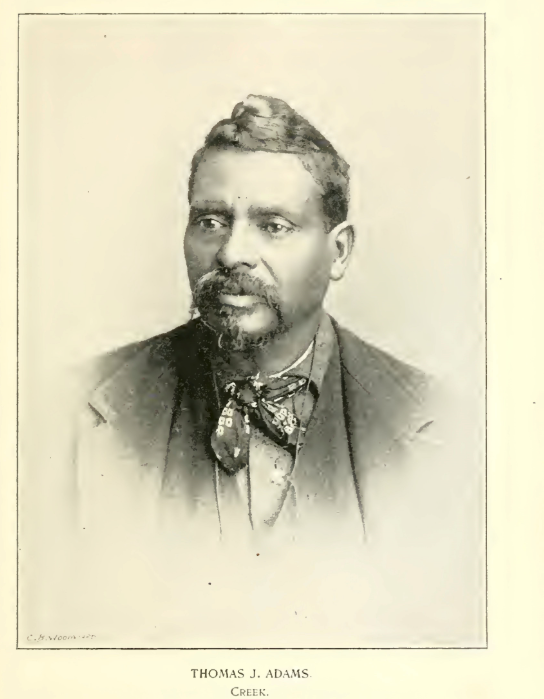
Below, you’ll see two official U.S. government records—both documenting one of my direct ancestors. Thomas Jefferson Adams Harjo.
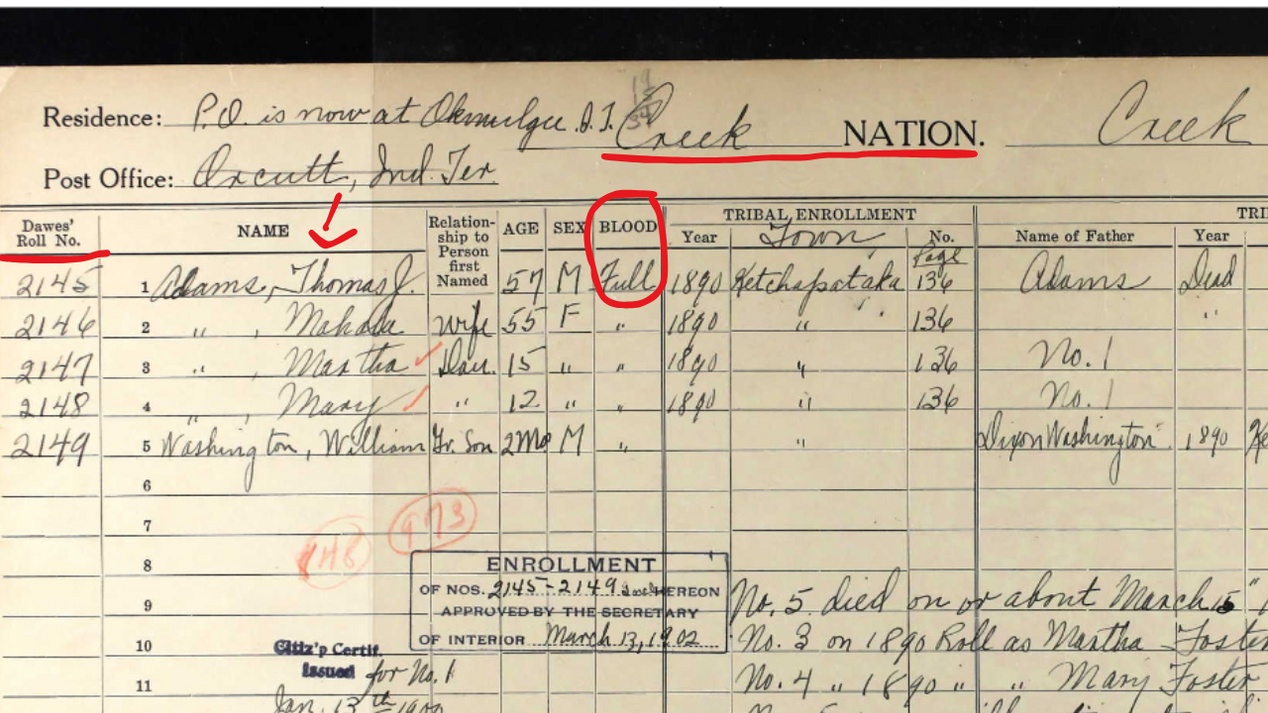
Creek Nation certificate
📜 The first is from the Dawes Roll, the federal list created in the early 1900s to register members of the Five Civilized Tribes.
As you’ll see, my ancestor is listed as a Full-Blood Indian—a clear acknowledgment of their tribal heritage and cultural identity.
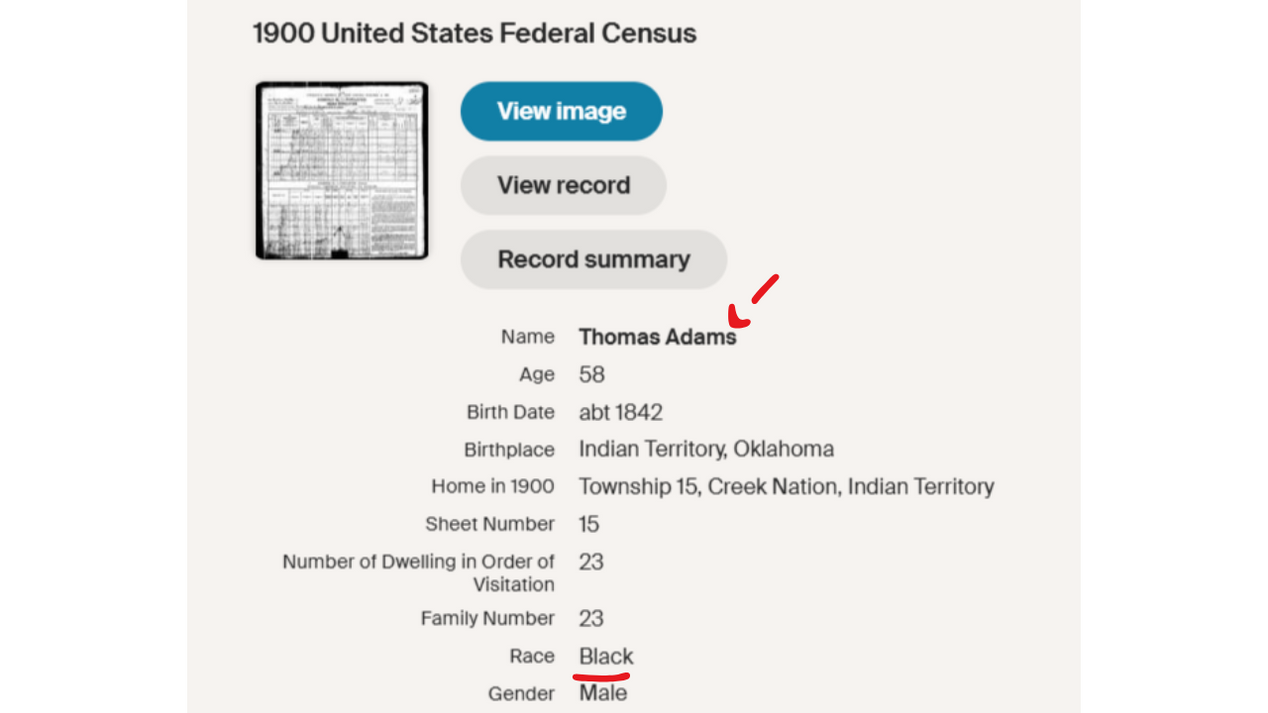
1900 US Census
But then, take a look at the second image:
📄 That’s the federal census record from just a few years later.
Same ancestor.
Same location.
But this time, the government marked them as Negro.
No tribe. No Indian classification.
Just folded into the general Black population—without consent, without explanation.
That wasn’t a mistake.
That was paper genocide.
This is what happened to millions of Indigenous Black Americans across the South.
Their identities were stripped away on paper—one document at a time—by a system designed to erase, absorb, and exploit.
This wasn’t just about racism. It was about land, power, and control.
By reclassifying tribal people as Negro or Colored, the government could:
-
Deny them land rights
-
Remove them from tribal rolls
-
Steal their inheritance
-
And make sure future generations never knew who they really were
This is why so many of our elders say, “My grandma said we had Indian in us.”
They weren’t lying.
They just didn’t have the tools to prove it.
Now we do.
And I’m not showing you this to just share my story—I’m showing you because this might be your story, too.
If you’re ready to go deeper, tomorrow I’m going to pull back the curtain on how far this went—how the reclassification of Black Indians was not an exception, but the rule across the Southeast.
You’re not crazy.
You’re not reaching.
You’re remembering.
—Mike
Founder, Native Black Ancestry
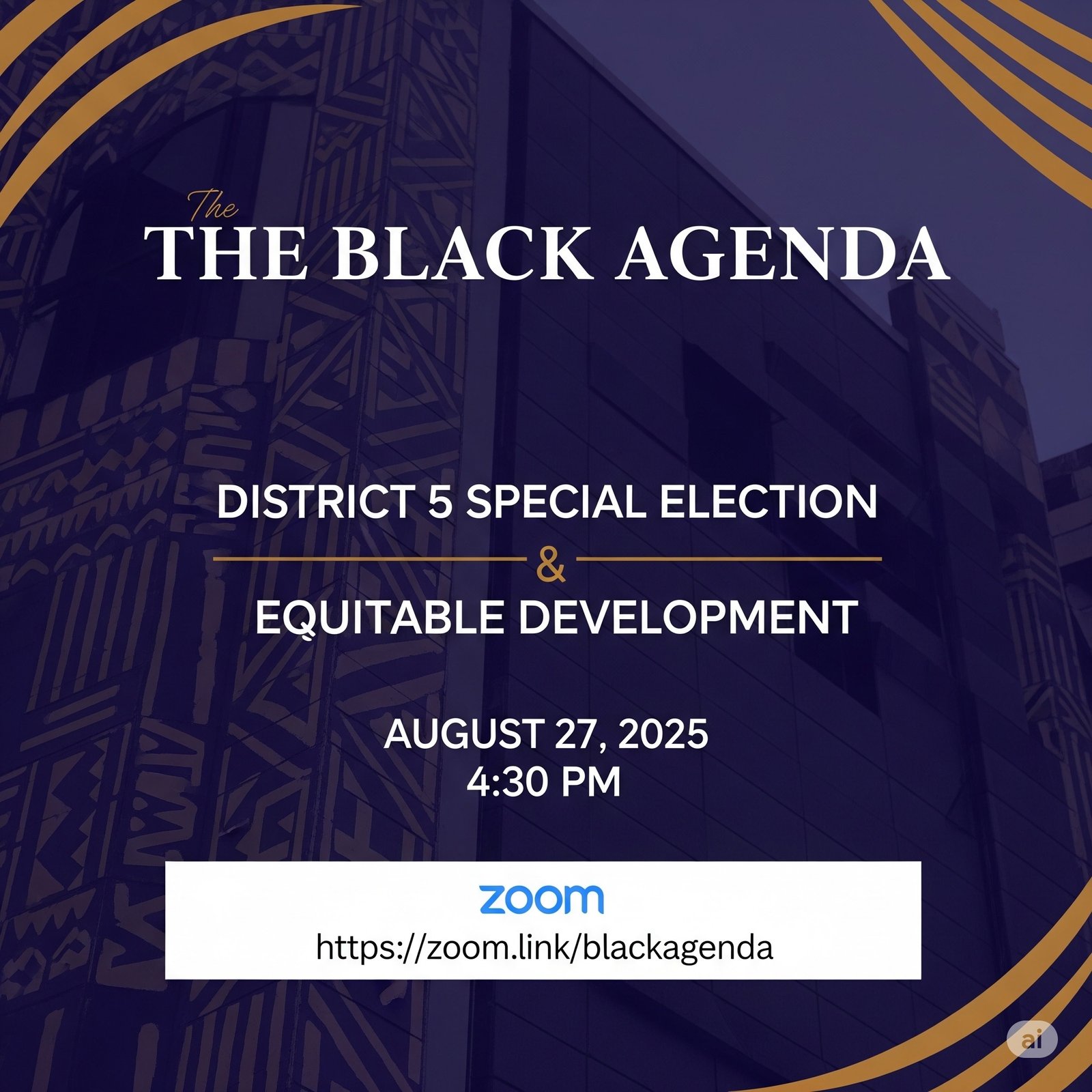
(TAMPA, FL – August 12, 2025) – The Black Agenda is coming! Join us this August for a powerful virtual town hall where residents, neighborhood associations, nonprofit leaders, faith communities, and other key stakeholders will come together to share their concerns and discuss solutions.
 This event will be streamed live and will feature candidates offering their vision for the future of West Tampa.
This will be a street-level, bottom-up dialogue—focused on real voices, real stories, and real strategies to protect and uplift our community.
https://us02web.zoom.us/…/register/n2MwP53TQ-2e9xfih1rrAg
Join us this August for a powerful virtual town hall.

Deadline Aug. 5: Center for Black Entrepreneurship Opens Paid Internship Program for AUC Students

N.C. A&T to Host 100th Greatest Homecoming on Earth Virtual News Conference on Friday
BlackUSA.News Unveils New National Platform Connecting Readers to America’s Leading Black Media

Gospel Legend Calvin Bridges Celebrates 50 Years of ‘I Can Go to God in Prayer,’ a Song That Helped Shape Black Gospel Music

Crawford Family Donates $2 Million to Spelman and Morehouse to Expand Opportunity for HBCU Students

Remember Who You Are: The Indigenous Series

Remember Who You Are: The Indigenous Series 📱

Indigenous Series: Reclaiming Our Legacy

Indigenous Series: Reclaiming Our Legacy 📱

Indigenous Series: Save Our Legacy 📱
-

 News1 year ago
Voices of West Tampa: District 5 Special Election Forum, Aug. 27th
-

 HBCU1 year ago
Lincoln University’s Vice President and General Counsel Venus D. Boston Appointed to National Legal Board
-

 Videos2 years ago
New Life Recovery Program: Rev. Terry Thornton
-
 Videos2 years ago
New Life Recovery Show: Bro. Curtis Warren, Brothers Helping Brothers
-

 Videos2 years ago
Emmy-nominated Doni Glover Show: Serial Entrepreneur Lance London
-
 Videos2 years ago
Emmy-nominated Doni Glover Show: Barry Williams for Balto. Co. Exec
-

 Black Wall Street1 year ago
Mandy Bowman and the Rise of Black Women in Business: A Testament to Tenacity and Transformation
-
 Videos2 years ago
Emmy-nominated Doni Glover Show: Pastor Robert Turner, Empowerment Temple