














News
A Photographer Who Has Always Worked on a Large Scale Goes Even Bigger

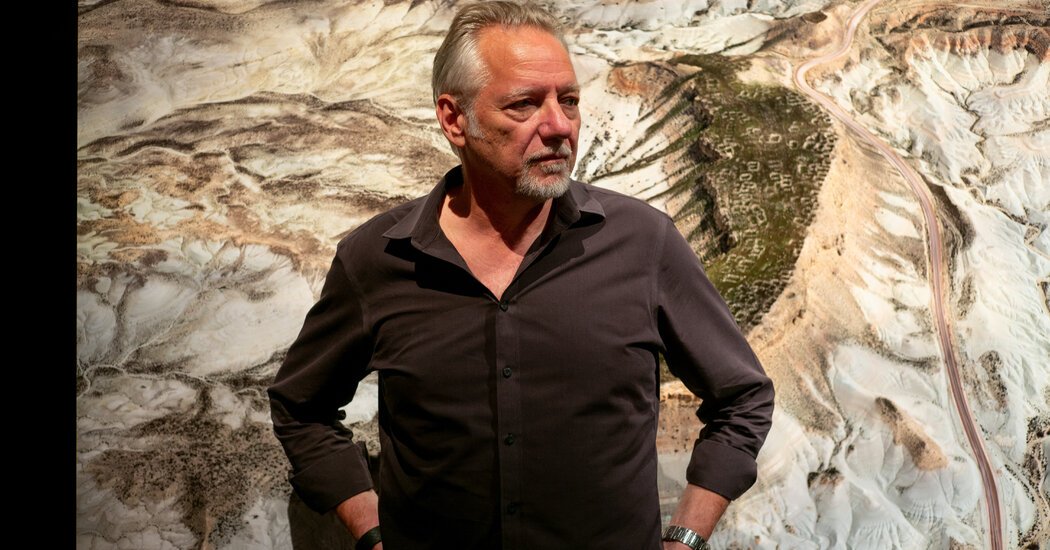

Long before the climate crisis was the focus of global concern Canadian photographer Edward Burtynsky was traveling the world documenting what people have inflicted on the environment and, by extension themselves.
His work has always been monumental both in its subjects and approach. For most of his four-decade-long-career Mr. Burtynsky sought out the largest examples of what he wanted to document, like open pit mines and photographed them using cameras that made 4-by-5 or 8-by-10-inch negatives, which he printed at an oversized scale.
He’s long since moved on to working in digital photography, and he’s also exploring new ways of presenting his work other than just in books and as prints. His most recent project has gone from oversized to gigantic in scale.
“In The Wake of Progress” takes 40 years of Mr. Burtynsky’s works, including some video projects, and combines them with a powerful, emotional soundtrack composed by Phil Strong to create a multimedia experience. Anyone who visited Expo 67 will likely be reminded of The National Film Board of Canada’s “Labyrinth.”
It debuted on an extreme scale. For Toronto’s Luminato Festival, Mr. Burtynsky was allowed to take over the 22 screens that normally light up Toronto’s Dundas Square with advertising several stories tall. He’s followed that with a three-screen version, with each screen standing about 10 meters high. “In The Wake of Progress” recently closed in Toronto and is coming to Montreal this fall.
The sheer size of the projections brings dramatic changes to even Mr. Burtynsky’s most familiar works. The factory workers who appear as just rows of people in prints or books become individuals, and details emerge to the foreground.
I spoke with Mr. Burtynsky shortly before the smaller scale, yet still very large, Toronto show closed. The highlights of our conversation have been edited for clarity and length:
When you were offered the Dundas Square screens, was the idea immediately appealing?
I thought: Wouldn’t it be interesting to kind of have an arc of my complete career and to start and kind of buttress it with nature, to say we come from nature? And so it starts with an old growth, ancient forest and ends at that same forest.
It was also way to reference that the square was a grove of trees in the not-that-distant past.
A lot of public art, I feel, doesn’t directly connect. So I wanted to have the idea of somebody leaving Nordstrom’s with their shopping bag and then, all of a sudden, being swept up into a roller-coaster ride experience.
Why did you start photographing the effect of people on the planet?
I started in photography at Ryerson and my first-year assignment was: Go out and find evidence of man. Then I started thinking about how ruins are this evidence of the lives of humans passing.
I grew up in St. Catharines, where there are all these leftover bits of the Welland Canal — the canal went through four different routes through time. I mapped all the different routes, I biked them all and then I started photographing these remnants.
It suited the way I like to think. It was kind of like they gave me like a hall pass to like be an alien. It was as if I had to come to this planet to report back to another intelligence about what we’re doing to the planet. I would show this other how we’re changing the planet, how we’re deforesting and how we’re turning it into farmland, how we’re extracting metals from the earth, how we’re using its water, how we’re using technology.
Our land of plenty will eventually become a land of scarcity because all the easy stuff will get picked over and the land will be depleted.
One striking thing about your work is how it reveals the skill people have at building things on an inhuman scale.
I always refer to that as the contemporary sublime. In the past the sublime was, if you look at the Romantics, nature. It was the gale force winds, the storm at sea. And we’re dwarfed in its presence and we’re overwhelmed and in awe of it.
The contemporary sublime is our technological revolution where we have dwarfed ourselves with our own creations. We are little trucks in this big open pit mine. We’re creating these 400- ton machines that can move tons of material in one bucket.
I look for landscapes that feel like they come from alien worlds, yet they are the world that we created. These things have this surreal quality to them and scale to them. There’s no reason for us who live in cities to go see these places. So I’m in a way bearing witness and bringing these things back to consider.
Trans Canada
A native of Windsor, Ontario, Ian Austen was educated in Toronto, lives in Ottawa and has reported about Canada for The New York Times for the past 16 years. Follow him on Twitter at @ianrausten.
How are we doing?
We’re eager to have your thoughts about this newsletter and events in Canada in general. Please send them to nytcanada@nytimes.com.
Like this email?
Forward it to your friends, and let them know they can sign up here.
Read the full article here




News
BlackUSA.News Unveils New National Platform Connecting Readers to America’s Leading Black Media
(NEW YORK – July 2, 2026) – For more than two centuries, the Black Press has documented the triumphs, struggles, businesses, politics, faith, education, and culture of Black America. Today, that tradition enters a new chapter.
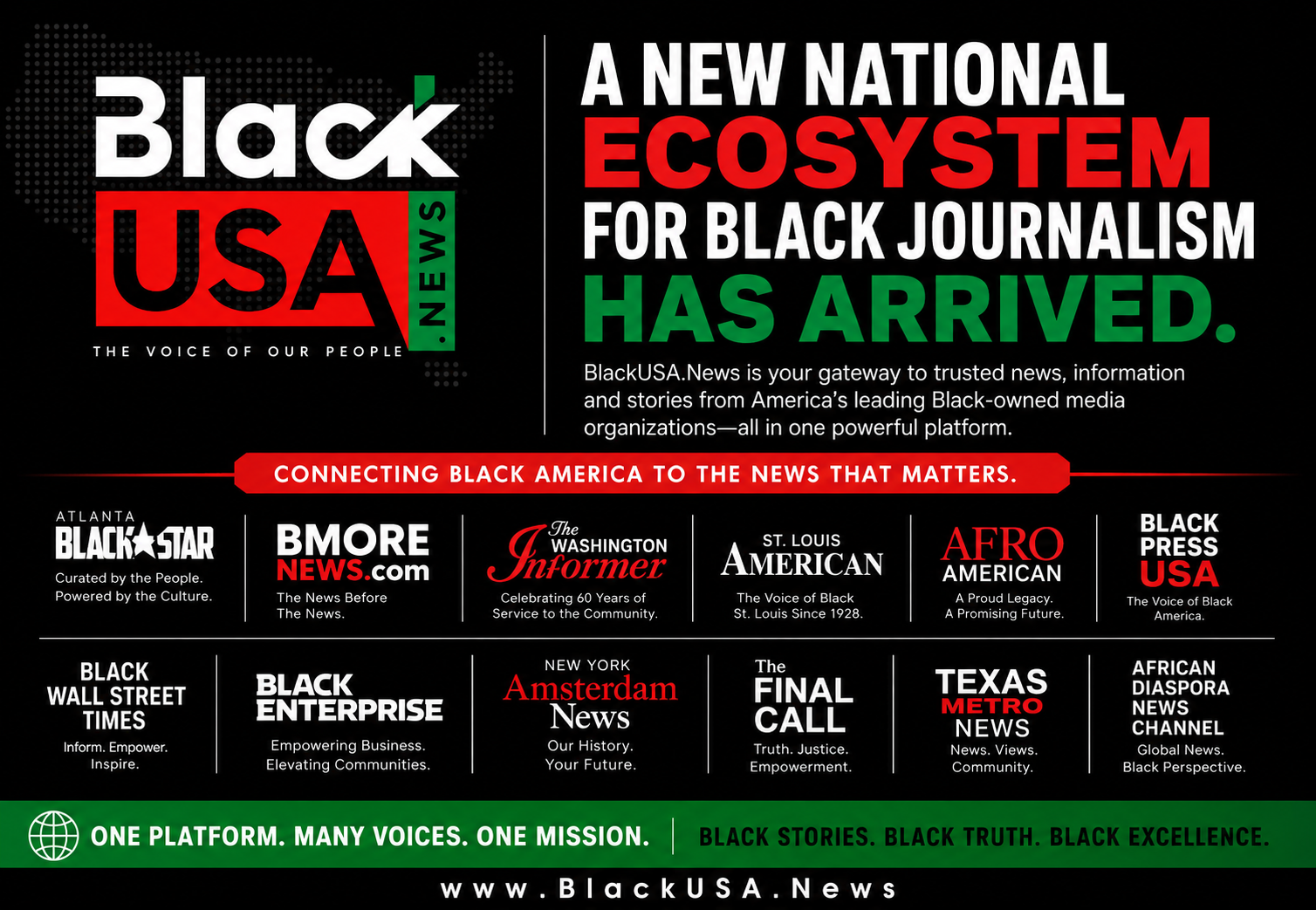
BlackUSA.News has launched a newly redesigned national platform that not only delivers original reporting from across the country but also connects readers directly to many of the nation’s most respected Black-owned news organizations.
Visitors can now easily navigate to trusted journalism from publications including:
- Atlanta Black Star
- BMORENews.com
- Washington Informer
- St. Louis American
- AFRO-American Newspapers
- Black Press USA
- Black Wall Street Times
- Black Enterprise
- New York Amsterdam News
- The Final Call
- Texas Metro News
- African Diaspora News Channel
Rather than asking readers to search dozens of websites independently, BlackUSA.News serves as a national gateway—bringing together voices that have informed, educated, and empowered Black communities for generations.
“Our vision has always been bigger than one publication,” said Doni Glover, founder of BlackUSA.News. “The Black Press has never lacked great journalism. What we’ve often lacked is visibility, discoverability, and a common front door. BlackUSA.News helps solve that problem.”
The redesigned platform reflects the publication’s ongoing evolution from a news website into a national knowledge network that documents Black life, leadership, entrepreneurship, education, government, philanthropy, and community institutions across America.
Readers will continue to find original reporting, exclusive interviews, Black Wall Street coverage, business news, political analysis, and community stories while also discovering journalism from historic and emerging Black-owned media organizations nationwide.
As artificial intelligence, search engines, and social media increasingly determine what news people see, BlackUSA.News believes collaboration—not competition—is one of the strongest strategies for ensuring Black stories remain visible and accessible.
“This isn’t about replacing anyone,” Glover said. “It’s about strengthening the entire ecosystem.”
The redesign represents another milestone in BlackUSA.News’ mission to document Black excellence city by city while helping readers connect with trusted Black journalism wherever it is being produced.
Future versions of BlackUSA.News will continue to expand beyond news, creating one of the nation’s most comprehensive knowledge platforms that document Black-owned businesses, nonprofits, churches, elected officials, educational institutions, media organizations, and community leaders—building a living digital map of Black America.
BlackUSA.News
Connecting Black America, One Story at a Time.
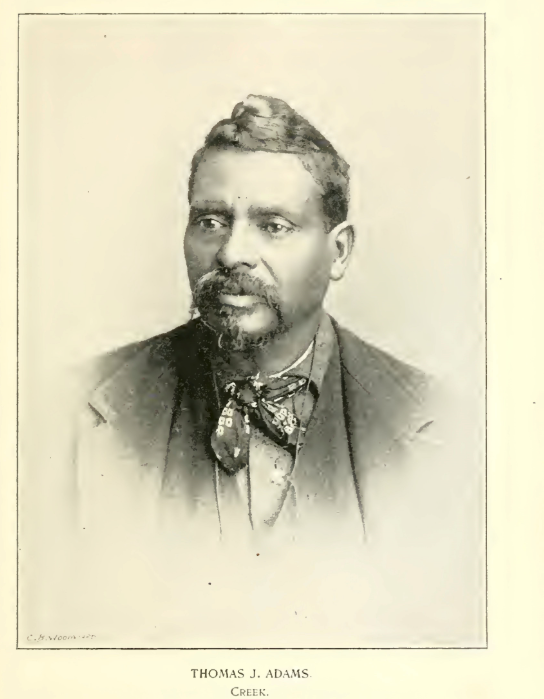
(OKLAHOMA – August 17, 2025) – When I first started researching my family’s genealogy, I thought I was just going to fill in a few blanks.
Instead, I uncovered a lie so deep, so systematic, it reshaped everything I thought I knew about who we are as a people.
I want to show you something personal.
Below, you’ll see two official U.S. government records—both documenting one of my direct ancestors. Thomas Jefferson Adams Harjo.
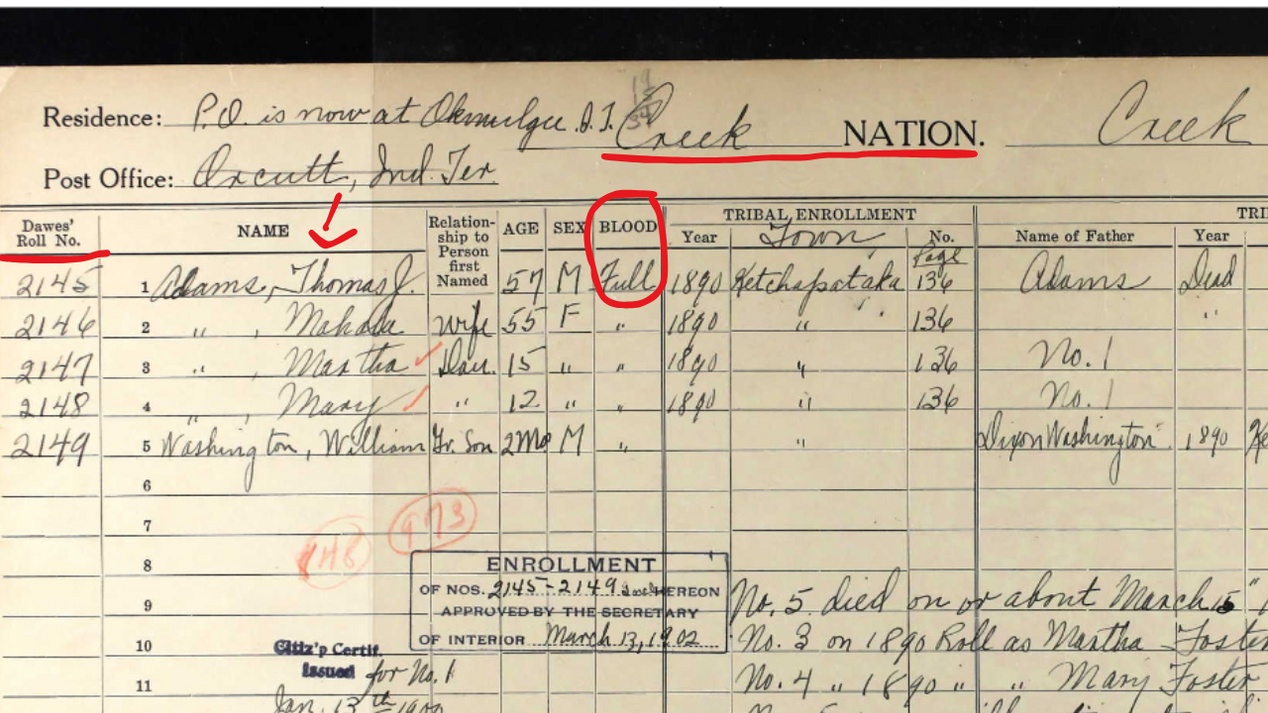
Creek Nation certificate
📜 The first is from the Dawes Roll, the federal list created in the early 1900s to register members of the Five Civilized Tribes.
As you’ll see, my ancestor is listed as a Full-Blood Indian—a clear acknowledgment of their tribal heritage and cultural identity.
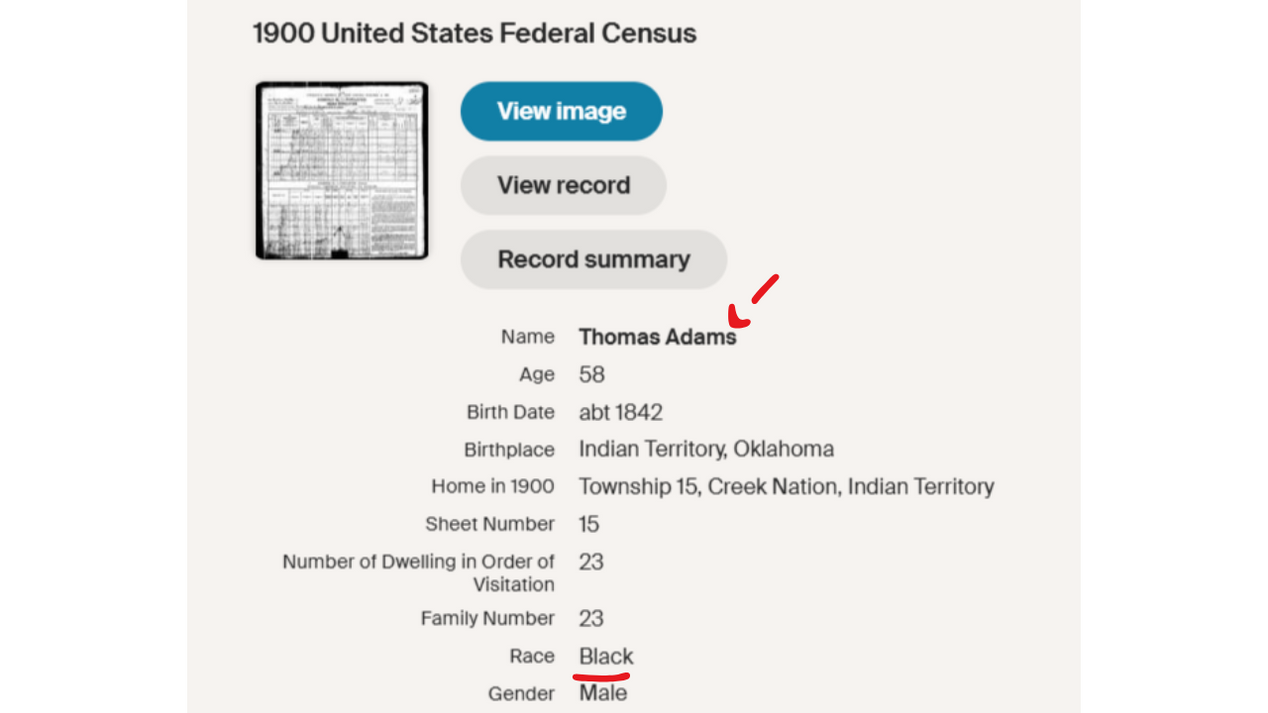
1900 US Census
But then, take a look at the second image:
📄 That’s the federal census record from just a few years later.
Same ancestor.
Same location.
But this time, the government marked them as Negro.
No tribe. No Indian classification.
Just folded into the general Black population—without consent, without explanation.
That wasn’t a mistake.
That was paper genocide.
This is what happened to millions of Indigenous Black Americans across the South.
Their identities were stripped away on paper—one document at a time—by a system designed to erase, absorb, and exploit.
This wasn’t just about racism. It was about land, power, and control.
By reclassifying tribal people as Negro or Colored, the government could:
-
Deny them land rights
-
Remove them from tribal rolls
-
Steal their inheritance
-
And make sure future generations never knew who they really were
This is why so many of our elders say, “My grandma said we had Indian in us.”
They weren’t lying.
They just didn’t have the tools to prove it.
Now we do.
And I’m not showing you this to just share my story—I’m showing you because this might be your story, too.
If you’re ready to go deeper, tomorrow I’m going to pull back the curtain on how far this went—how the reclassification of Black Indians was not an exception, but the rule across the Southeast.
You’re not crazy.
You’re not reaching.
You’re remembering.
—Mike
Founder, Native Black Ancestry
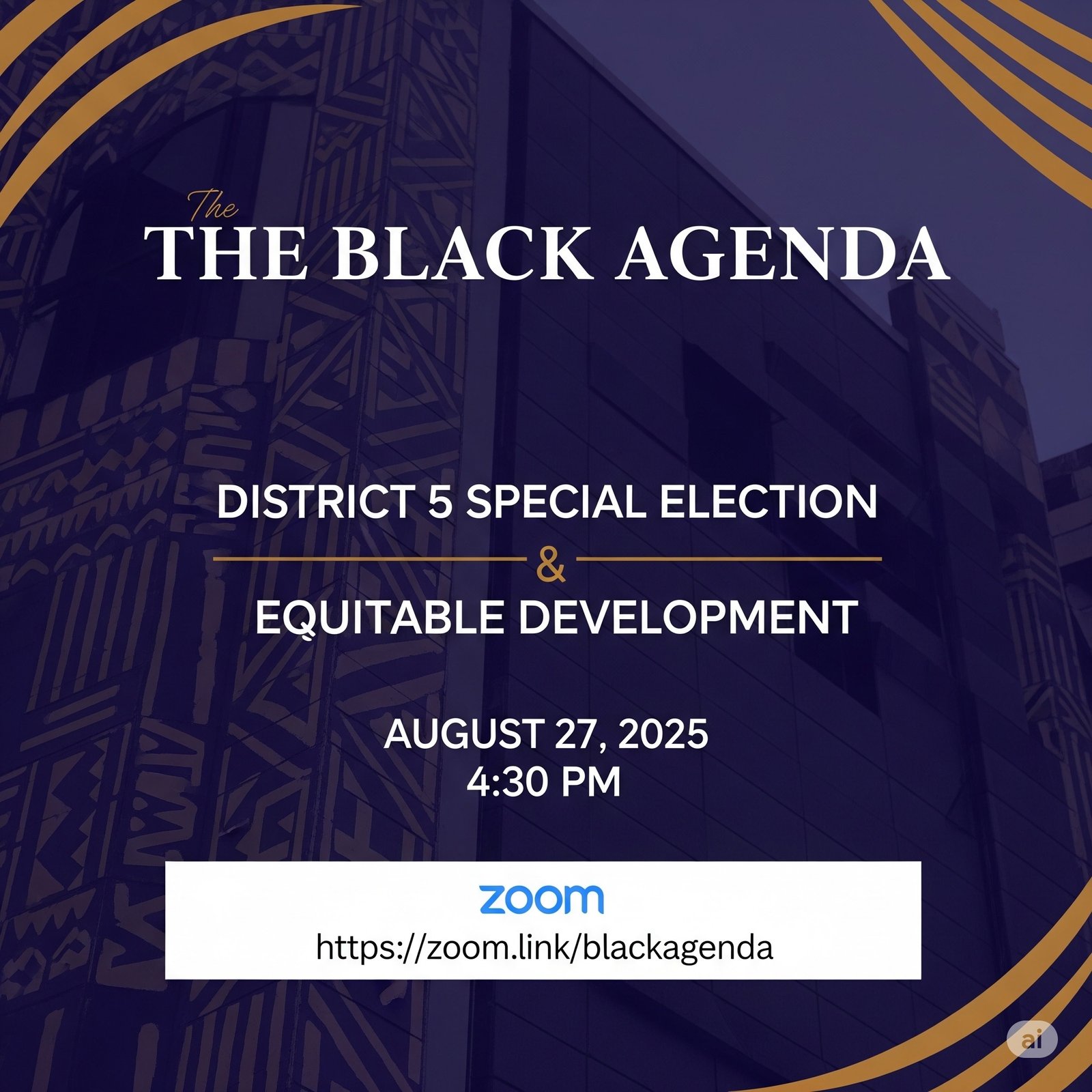
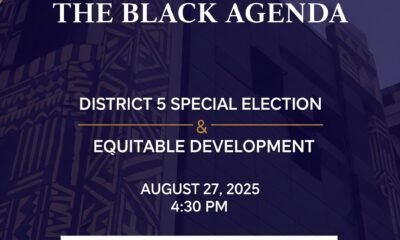
(TAMPA, FL – August 12, 2025) – The Black Agenda is coming! Join us this August for a powerful virtual town hall where residents, neighborhood associations, nonprofit leaders, faith communities, and other key stakeholders will come together to share their concerns and discuss solutions.
 This event will be streamed live and will feature candidates offering their vision for the future of West Tampa.
This will be a street-level, bottom-up dialogue—focused on real voices, real stories, and real strategies to protect and uplift our community.
https://us02web.zoom.us/…/register/n2MwP53TQ-2e9xfih1rrAg
Join us this August for a powerful virtual town hall.

Deadline Aug. 5: Center for Black Entrepreneurship Opens Paid Internship Program for AUC Students

N.C. A&T to Host 100th Greatest Homecoming on Earth Virtual News Conference on Friday
BlackUSA.News Unveils New National Platform Connecting Readers to America’s Leading Black Media

Gospel Legend Calvin Bridges Celebrates 50 Years of ‘I Can Go to God in Prayer,’ a Song That Helped Shape Black Gospel Music

Crawford Family Donates $2 Million to Spelman and Morehouse to Expand Opportunity for HBCU Students

Remember Who You Are: The Indigenous Series

Remember Who You Are: The Indigenous Series 📱

Indigenous Series: Reclaiming Our Legacy

Indigenous Series: Reclaiming Our Legacy 📱

Indigenous Series: Save Our Legacy 📱
-
 News1 year ago
Voices of West Tampa: District 5 Special Election Forum, Aug. 27th
-

 HBCU1 year ago
Lincoln University’s Vice President and General Counsel Venus D. Boston Appointed to National Legal Board
-

 Videos2 years ago
New Life Recovery Program: Rev. Terry Thornton
-
 Videos2 years ago
New Life Recovery Show: Bro. Curtis Warren, Brothers Helping Brothers
-

 Videos2 years ago
Emmy-nominated Doni Glover Show: Serial Entrepreneur Lance London
-
 Videos2 years ago
Emmy-nominated Doni Glover Show: Barry Williams for Balto. Co. Exec
-

 Black Wall Street1 year ago
Mandy Bowman and the Rise of Black Women in Business: A Testament to Tenacity and Transformation
-
 Videos2 years ago
Emmy-nominated Doni Glover Show: Pastor Robert Turner, Empowerment Temple