





















Africa/Caribbean
France’s Final Withdrawal from Francophone West Africa: A Victory for Sovereignty

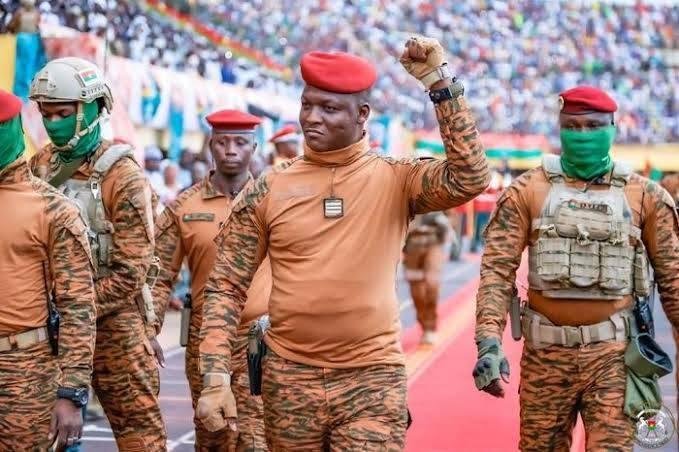

(WASHINGTON, DC – July 20, 2025) – After more than six decades of post-colonial military presence, France has officially withdrawn its last permanent troops from Francophone West Africa. This departure marks a significant triumph for nations reclaiming full sovereignty and marks a pivotal moment in the region’s history.
🏳️ Final Handover in Senegal
In Dakar on July 17, 2025, France ceremonially transferred Camp Geille—its largest base in Senegal—and an adjacent air facility to Senegalese authorities. Around 350 French soldiers, who had been engaged in joint operations with the Senegalese army, are now departing, concluding a withdrawal process that began in March Business Insider Africa+2AP News+2Reuters+2.
French General Pascal Ianni described the handover as part of a strategic shift toward “flexible partnerships,” while Senegal’s Gen. Mbaye Cissé hailed the move as bolstering “the autonomy of the Senegalese armed forces” and strengthening regional peace Business Insider Africa+2AP News+2Reuters+2.
🇸🇳 Regional Trend: From Bases to Self-Reliance
This withdrawal aligns with a growing wave across French-speaking Africa. Nations such as Mali, Burkina Faso, Niger, Chad, Gabon, and Côte d’Ivoire have recently expelled French troops, terminated defence agreements, or amicably handed back bases. The move reflects mounting public and political opposition to what is perceived as neocolonial control Business Insider AfricaAP NewsReuters.
✊ Senegal’s Sovereignty Stand
President Bassirou Diomaye Faye, elected in March 2024, made France’s military exit a central campaign promise. Senegal now joins other West African nations in asserting that foreign military installations are incompatible with national autonomy Business Insider Africa+7Reuters+7AP News+7. The country, however, maintains diplomatic ties with France and seeks cooperation “on its own terms,” consistent with civilian governance.
🌍 France’s New Strategic Vision
France plans to shift from maintaining permanent bases to providing training, intelligence sharing, and targeted support—responding to requests rather than unilateral deployment AP News+1Reuters+1. Its only remaining permanent military base in Africa will be in Djibouti, serving as its continental hub.
🧭 Implications Ahead
The pullout represents more than military realignment—it’s a strategic recalibration. African nations are gaining agency over defence, forging new alliances (notably with Russia in the Sahel), and redefining foreign partnerships independent of their colonial past. For France, this marks a reorientation from direct control toward a support-based role.
🔗 Original Articles & Author Profiles
-
Babacar Dione & Mark Banchereau, Associated Press.
“France withdraws from Senegal, ending its permanent military presence in West Africa.” AP News, July 17, 2025. Business Insider Africa+8AP News+8AP News+8Wikipedia+6BusinessMirror+6BusinessMirror+6 -
Chinedu Okafor, Business Insider Africa.
“French military era ends in West Africa as Senegal reclaims last base.” Business Insider Africa, July 17, 2025. Muck Rack+13Business Insider Africa+13e-mc2.gr+13 -
Chinedu Okafor, Business Insider Africa.
Profile: “Chinedu is a Senior Reporter at Business Insider Africa with 5 years of experience creating profoundly engaging and insightful content.” Business Insider Africa+4Business Insider Africa+4Business Insider Africa+4 -
Babacar Dione & Mark Banchereau, Associated Press.
Author profiles: Babacar Dione & Mark Banchereau, AP journalists covering West and Central Africa. Wikipedia+6BusinessMirror+6BusinessMirror+6


Africa/Caribbean
Secretary-General Gravely Alarmed by Israel’s Decision to Take Control of Gaza City
(NEW YORK – August 8, 2025) – The following Security Council press statement was issued today by Council President Eloy Alfaro de Alba (Panama):
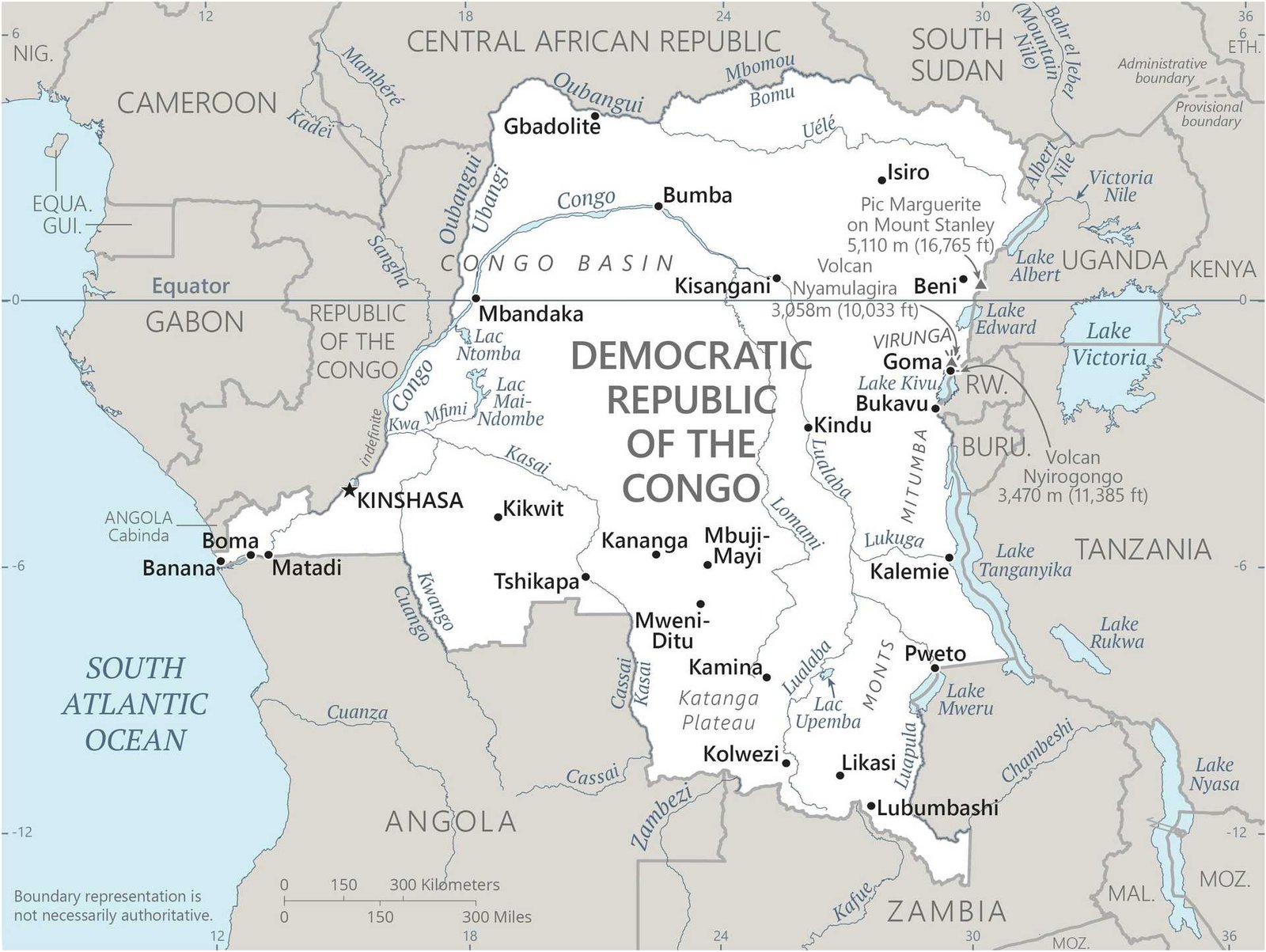
The members of the Security Council condemned in the strongest terms the heinous attacks carried out by the Allied Democratic Forces (ADF) armed group in the night of 26-27 July on a place of worship in Komanda, Ituri province in the north-east of the Democratic Republic of the Congo, which resulted in the death and injury of numerous civilians, including women and children.
They expressed their deepest condolences to the families of the victims and to the Government of the Democratic Republic of the Congo and wished a swift recovery to those injured.
The members of the Council underscore the importance of holding accountable the perpetrators, organizers, financiers, and sponsors of these reprehensible acts and bringing them to justice.
The members of the Security Council expressed grave concern over the security situation in the eastern Democratic Republic of the Congo and underscored the need for all parties to fully comply with international law, including provisions governing the protection of civilians. The members of the Security Council reiterated their strong condemnation of all armed groups operating in the Democratic Republic of the Congo and their violations of international humanitarian law as well as other applicable international law and abuses of human rights. They further condemned all attacks on civilian population and infrastructure.
They supported the intensification of efforts by the United Nations Organization Stabilization Mission in the Democratic Republic of the Congo (MONUSCO) in supporting the Congolese authorities in the protection of civilians and addressing the threats posed by armed groups. They underscored the importance of continued cooperation between MONUSCO and the Government of the Democratic Republic of the Congo, in line with the Mission’s mandate.
The members of the Security Council reaffirmed their strong commitment to the sovereignty, independence, unity and territorial integrity of the Democratic Republic of the Congo and reiterated support for regional and international efforts to promote peace and stability in the country and the wider Great Lakes region.
Source: https://www.cia.gov/
(BALTIMORE – August 1, 2025) – As I pen this column, names like Martin Delaney, Marcus Garvey—with Bob Marley’s “War” playing in the background—come to mind. So do W. E. B. Du Bois and Kwame Nkrumah. “One God. One Aim. One Destiny.” Those words have echoed on signs and posters for decades. We cannot forget J. A. Rogers or Dr. Carter G. Woodson, author of The Miseducation of the Negro. These historians have schooled us for over a century on who we, the people of darker hue, truly are. Some identify us as Moors, others as Indigenous peoples, and still others as the Lost Tribe of Judah—as referenced in Deuteronomy 28. Whatever the case, the history of Black people in America did not start nor end with slavery. Our story is far more layered, rich with legacy.
Since childhood, I’ve marveled at Africa. At 15, I had a map on my wall showing all the continent’s presidents and leaders at the time. One name that stuck was General Jerry Rawlings of Ghana, a key figure who led his nation through significant political and economic shifts from the late 1970s into the early 2000s. I also remember Egypt’s Anwar Sadat and, vividly, the movie about Idi Amin. That film was an early lesson in the power—and danger—of media narratives. As Malcolm X said, media can make the innocent appear guilty and the guilty innocent. Add in portrayals like Tarzan, The Birth of a Nation, and The Lone Ranger, and it’s clear Hollywood never intended to make Black people, Africa, or anything remotely related popular or respected. Blackness is routinely demonized, marginalized, and disrespected. The Black person in movies is often either the comic relief or the first to be killed—what I call a “Crispus Attucks loop.”
I disliked the Idi Amin movie not because of the man himself—I knew little then—but because I intuitively understood that Western stories about African leaders are rarely positive unless those leaders serve Western interests. While there’s nothing inherently wrong with alliances or relationships that include Western powers, when such ties lead to a less developed Africa and a more developed outsider, the relationship is unbalanced—and that’s a problem.
This dynamic has played out in Africa for far too long. The 1960s independence movements replaced colonialism with neo-colonialism. Recall that in the late 19th and early 20th centuries, European powers carved up Africa in what’s called “The Scramble for Africa.” The Berlin Conference of 1884–1885, convened by German Chancellor Otto von Bismarck, was pivotal. No Africans were invited as Britain, France, Germany, Belgium, Portugal, Italy, and Spain divided the continent to avoid conflict amongst themselves.
Between the 1870s and 1914, European colonizers rapidly seized African lands. By World War I’s outbreak, nearly 90% of Africa was under foreign control. Britain and France claimed the largest shares, while Belgium, Germany, Portugal, and Italy imposed brutal and exploitative regimes. The colonial borders, drawn without regard for ethnic or cultural realities, planted the seeds of many future conflicts.
Europe benefited from this colonial relationship, but Africa did not. Change was inevitable—you can’t keep kicking a man while he’s down. Sooner or later, the bully gets his day. The African independence movement was a continent-wide effort in the mid-20th century to end European colonial rule and reclaim sovereignty. After World War II, weakened colonial powers and rising anti-imperialist sentiment created fertile ground for resistance.
The movement gained real momentum in the late 1940s and 1950s, with Ghana becoming the first sub-Saharan African nation to gain independence in 1957 under Kwame Nkrumah. The 1960s saw explosive change; 17 countries gained independence in 1960 alone, earning that year the moniker “The Year of Africa.” By the mid-1970s, most African nations had cast off colonial rule, though Zimbabwe (1980), Namibia (1990), and South Africa (1994) achieved theirs later.
This sweeping transformation was driven by Pan-Africanism, nationalist movements, Cold War geopolitics, and grassroots resistance—strikes, protests, and armed rebellions. Leaders like Nkrumah, Julius Nyerere, Patrice Lumumba, and Thomas Sankara helped shape Africa’s post-colonial vision. Though political freedom was won, new challenges arose: economic dependency, internal strife, and instability rooted in colonial-era borders. Still, the independence movement sparked cultural and intellectual renewal and laid the foundation for the African Union and ongoing efforts toward unity and development.
Here’s a snapshot of independence dates and key leaders across Africa:
West Africa:
-
Ghana (1957) — Kwame Nkrumah
-
Nigeria (1960) — Nnamdi Azikiwe, Tafawa Balewa
-
Senegal (1960) — Léopold Sédar Senghor
-
Guinea (1958) — Ahmed Sékou Touré
-
Ivory Coast (1960) — Félix Houphouët-Boigny
-
Mali (1960) — Modibo Keïta
-
Burkina Faso (1960) — Maurice Yaméogo
-
Togo (1960) — Sylvanus Olympio
-
Benin (1960) — Hubert Maga
-
Niger (1960) — Hamani Diori
Central Africa:
-
Cameroon (1960) — Ahmadou Ahidjo
-
Chad (1960) — François Tombalbaye
-
Central African Republic (1960) — David Dacko
-
Congo-Brazzaville (1960) — Fulbert Youlou
-
Gabon (1960) — Léon M’ba
-
Democratic Republic of the Congo (1960) — Patrice Lumumba
East Africa:
-
Kenya (1963) — Jomo Kenyatta
-
Tanzania (1961) — Julius Nyerere
-
Uganda (1962) — Milton Obote
-
Somalia (1960) — Aden Abdullah Osman Daar
-
Ethiopia — Never colonized (Emperor Haile Selassie)
-
Eritrea (1993) — Isaias Afwerki (after war with Ethiopia)
North Africa:
-
Egypt (1953) — Gamal Abdel Nasser
-
Algeria (1962) — Ahmed Ben Bella, FLN
-
Morocco (1956) — King Mohammed V
-
Tunisia (1956) — Habib Bourguiba
-
Libya (1951) — King Idris
-
Sudan (1956) — Ismail al-Azhari
Southern Africa:
-
Zimbabwe (1980) — Robert Mugabe
-
Namibia (1990) — Sam Nujoma
-
South Africa (1994) — Nelson Mandela (end of apartheid)
-
Angola (1975) — Agostinho Neto (MPLA)
-
Mozambique (1975) — Samora Machel (FRELIMO)
Ethiopia’s story deserves special mention. It stands as one of the few African nations never formally colonized. Ethiopia defended its sovereignty by defeating Italy at the Battle of Adwa in 1896 under Emperor Menelik II—a powerful symbol of African resistance. Though Italy briefly occupied Ethiopia from 1936 to 1941 under Mussolini, this was a military occupation, not formal colonization. Emperor Haile Selassie returned to power with Allied support, maintaining Ethiopia’s independent status alongside Liberia.
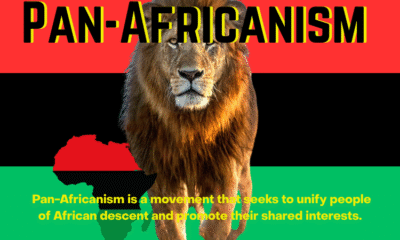
Today, Pan-Africanism is experiencing a resurgence, sparked by leaders like Captain Ibrahim Traoré of Burkina Faso. He has faced multiple assassination attempts by French interests because he demanded France remove its grip from Burkina Faso’s neck. France resisted but eventually retreated. Every Black person with good sense should take pride in Traoré’s stance.
In recent years, France has withdrawn its military presence from Mali (2022), Burkina Faso (2023), Niger (2023), and others amid rising anti-French sentiment and shifting geopolitics. These former French colonies in West Africa had been part of Operation Barkhane, France’s counterterrorism mission in the Sahel. Yet frustrations over neocolonial influence, lack of security improvements, and political meddling fueled demands for French exit.
This marks a broader decline of French influence as African nations seek new alliances with global powers like Russia and China. While France still maintains bases in Djibouti, Chad, and Côte d’Ivoire, its role is being reevaluated. These developments reflect a growing trend of African countries asserting autonomy and reconsidering post-colonial relationships with Europe—signaling a new chapter in Africa’s ongoing journey toward true self-determination and respect on the world stage.


The Black Press Is Not Dying — It’s Being Rebuilt

Remember Who You Are: The Indigenous Series 📱

Remember Who You Are: The Indigenous Series

Indigenous Series: Reclaiming Our Legacy 📱

Indigenous Series: Reclaiming Our Legacy
Remember Who You Are: The Indigenous Series
Remember Who You Are: The Indigenous Series 📱
Indigenous Series: Reclaiming Our Legacy
Indigenous Series: Reclaiming Our Legacy 📱

Indigenous Series: Save Our Legacy 📱
-

 HBCU8 months ago
Lincoln University’s Vice President and General Counsel Venus D. Boston Appointed to National Legal Board
-

 Videos3 years ago
Marsha Jews Interview
-

 Videos3 years ago
Emmy-nominated Doni Glover Show: Richard Elliott & Martin Mitchell
-

 Videos1 year ago
New Life Recovery Program: Rev. Terry Thornton
-
 Videos3 years ago
Prof. Larry Gibson Interview
-

 Videos3 years ago
Date 'Em ALL Sis! – Tonight's Topic: Goals, Dreams & Aspirations for the new you!
-

 Videos3 years ago
Emmy-nominated Doni Glover Show: Kevin Carr, Pres. of Coppin Alumni
-

 Videos3 years ago
Emmy-nominated Doni Glover Show: Adrian Harpool and MBE