







Business
ByBlack, Powered by U.S. Black Chambers, Awards $1,000 Microgrant to Student Entrepreneur at 2025 Durag Fest in Charlotte, NC

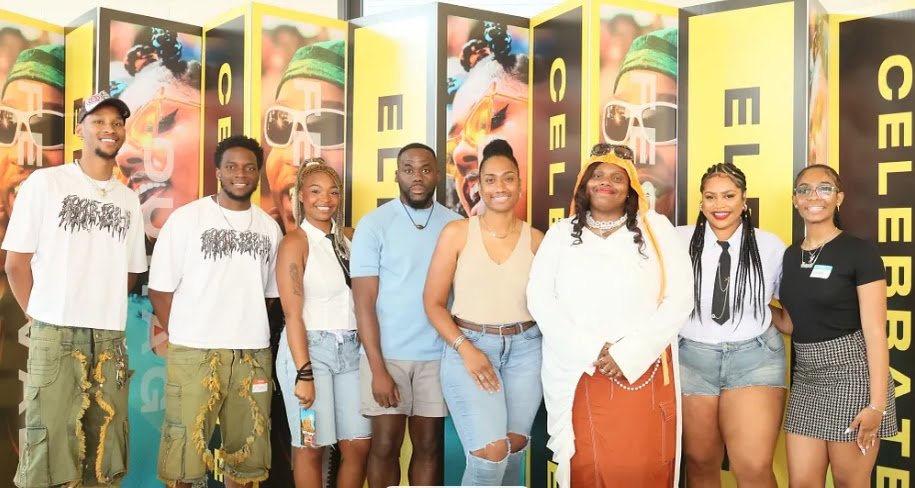

(CHARLOTTE – July 17, 2025) – In a collaboration to spotlight the next generation of Black entrepreneurs, ByBlack, powered by the U.S. Black Chambers, Inc. (USBC), and the DuGhood Foundation launched the “Pop Up & Pitch” Grant Competition during the 7th Annual Durag Fest, a vibrant Juneteenth celebration of Black creativity and culture in Charlotte, North Carolina.
The competition awarded a $1,000 microgrant and business development package to student entrepreneur Aalliyeh Clinton, founder of Monneah’s Engineered Materials, whose innovative, bio-friendly, and culturally inspired lab coats captured the attention of the live audience and expert judging panel. Clinton, a Morgan State graduate and current Johns Hopkins University graduate student, is redefining STEM apparel by infusing fashion, sustainability, and cultural identity into the lab space.
Hosted by Zhané Chesson, Co-Founder of So You Graduated, Now What?, finalists had 5 minutes to present their ventures before a live audience and panel of judges, including:
Finalists included Zion Asamoah (Goons and Goblins Clothing), Kenan Moore (Historically Cultured), Avianna Corbett (Lucky Spot Nail Spa), Kneisha Gabriel (KneishaX LLC), and Aalliyeh Clinton (Monneah’s Engineered Materials). After two compelling rounds, Clinton emerged as the winner, earning not just the microgrant, but a full business support package including:
“This opportunity isn’t just about funding—it’s about creating visibility, connection, and momentum,” said Alicea Gay. “ByBlack exists to elevate Black-owned businesses through access, exposure, and certification. Supporting young innovators like Aalliyeh reflects our mission to build a stronger ecosystem for the next generation of Black entrepreneurs.”
Clinton aims to reimagine what lab gear looks like and represents. “This grant and the resources that come with it are game-changing,” said Clinton. “I want scientists to feel seen, inspired, and proud of their culture even in sterile lab spaces. Monneah’s is about representation in research—where fashion meets innovation.”
The ByBlack Platform, powered by the U.S. Black Chambers, Inc., is the nation’s first national certification program and digital directory exclusively dedicated to Black-owned businesses. Created to address the historical lack of visibility and access faced by Black entrepreneurs, ByBlack provides both Verified and Certified business listings, enabling companies to gain formal recognition, connect with consumers actively seeking to support Black-owned brands, and unlock contracting and partnership opportunities with major corporations and government agencies.
Durag Fest, held annually in Charlotte in honor of Juneteenth, is a celebration of Black creativity, culture, and community. This year’s festival served as the perfect stage to highlight student entrepreneurs shaping the future.“Durag Fest has always been about celebrating the fullness of Black expression, from culture and creativity to enterprise,” said Lisa Michelle, Founder of Durag Fest. “Partnering with ByBlack to spotlight student entrepreneurs brings that vision to life. Aalliyeh and all the finalists remind us that our culture fuels innovation, and when we invest in young talent, we invest in our collective future.”
“Events like this bring our mission full circle,” said Cathay Dawkins of CMBCC. “Supporting youth entrepreneurship aligns with our goal of building wealth and networks locally. We encourage all Charlotte-based business owners to get involved—especially now, with discounted memberships available. Partnering with USBC and ByBlack opens doors that lead to funding, mentorship, and national recognition.”
For more information on ByBlack and how to certify or list your business, visit www.byblack.us.
___________________
About USBC:
The U.S. Black Chambers, Inc. (USBC) provides committed, visionary leadership and advocacy in the realization of economic empowerment. Through the creation of resources and initiatives, we support a network of African American Chambers of Commerce and business organizations in their work of developing and growing Black enterprises. Learn more at usblackchambers.org.



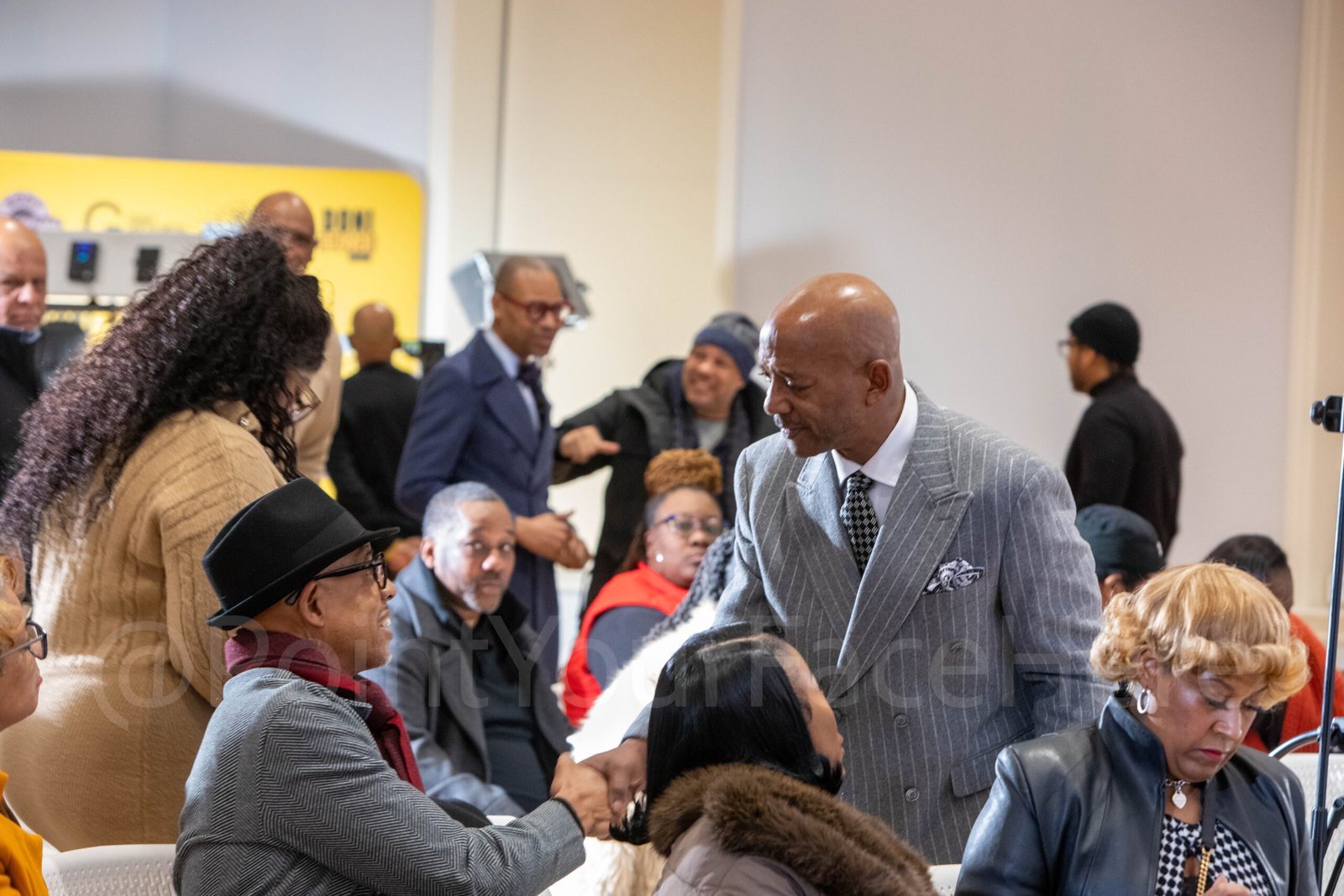
(RICHMOND – February 23, 2026) – Black-owned newspapers are disappearing before our eyes.
Historic institutions that once carried our stories, defended our dignity, and documented our victories are folding across the country. Newsrooms that anchored neighborhoods for generations are going quiet. Seniors who relied on the printed word are now being forced into a digital world that did not wait for them.
This is not just a Black problem. It is not even just an American problem. It is global.
Technology disrupted everything.
We once used pagers. Then cell phones replaced them. House phones became optional. Now news lives in the palm of your hand. A single influencer with a smartphone can reach more people in seconds than a newsroom once could in a week.
The game changed.
Years ago, The Baltimore Sun recruited me to blog for them. Soon after, their reporters were required to shoot video on their phones. The thing is — I had already been doing that. Innovation wasn’t new to us. We were early.
But disruption leaves casualties.
When a Black newspaper closes, something more than a business disappears. Institutional memory vanishes. Accountability weakens. Community narrative shifts into someone else’s hands.
That void is dangerous.
That is why we built BlackUSA.News.
Not as nostalgia.
Not as resistance to change.
But as adaptation with intention.
I have worked in the Black Press since 1994. I have seen what happens when we control our story — and what happens when we don’t.
BlackUSA.News is our answer to this moment.
We are not watching the Black Press die.
We are rebuilding it — digitally, nationally, unapologetically.
And we welcome all who are ready to build with us.
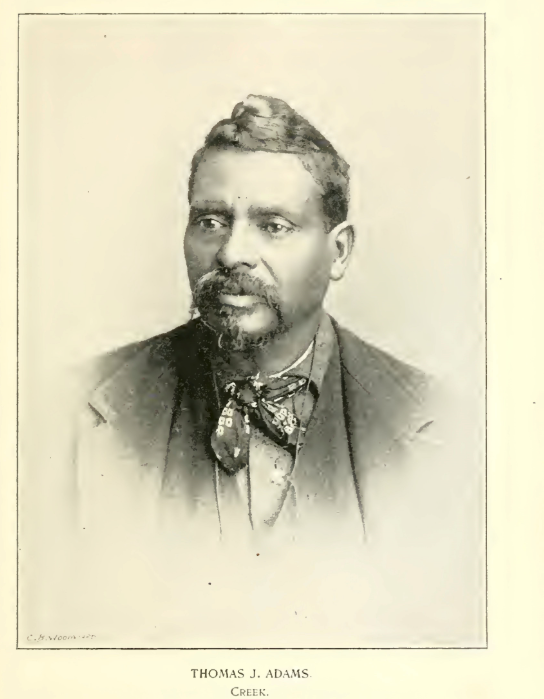
(OKLAHOMA – August 17, 2025) – When I first started researching my family’s genealogy, I thought I was just going to fill in a few blanks.
Instead, I uncovered a lie so deep, so systematic, it reshaped everything I thought I knew about who we are as a people.
I want to show you something personal.
Below, you’ll see two official U.S. government records—both documenting one of my direct ancestors. Thomas Jefferson Adams Harjo.
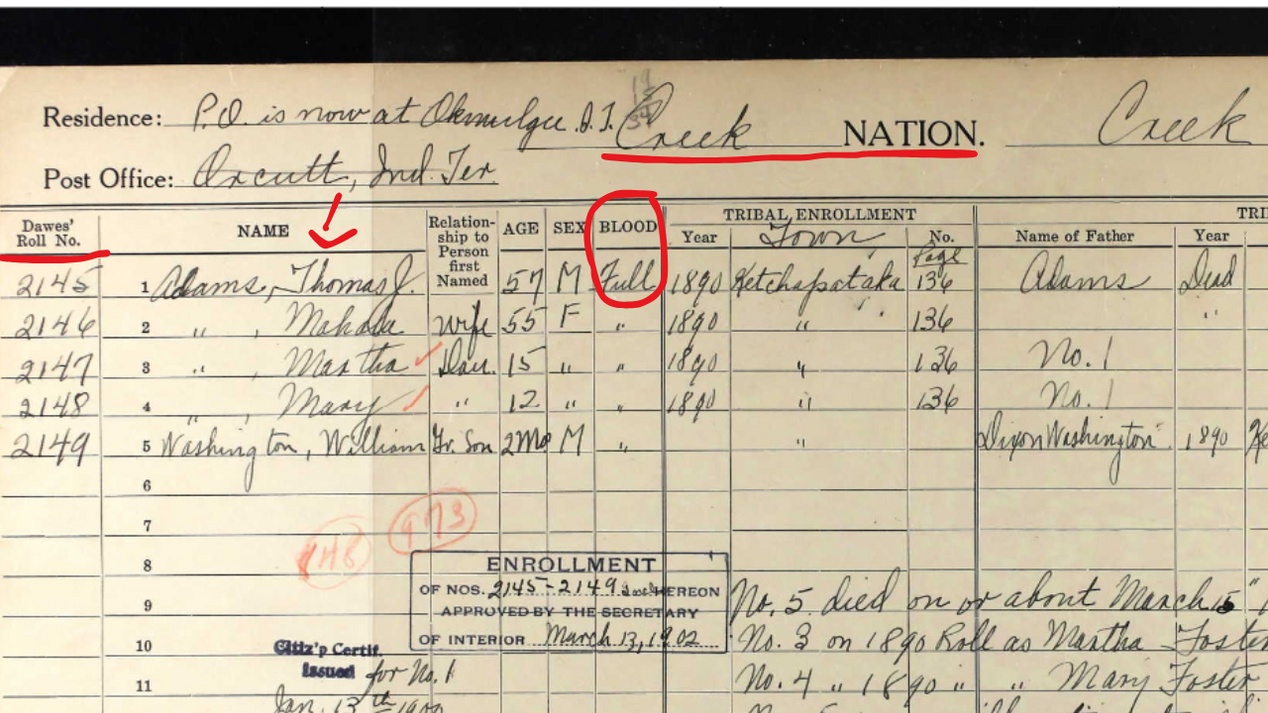
Creek Nation certificate
📜 The first is from the Dawes Roll, the federal list created in the early 1900s to register members of the Five Civilized Tribes.
As you’ll see, my ancestor is listed as a Full-Blood Indian—a clear acknowledgment of their tribal heritage and cultural identity.
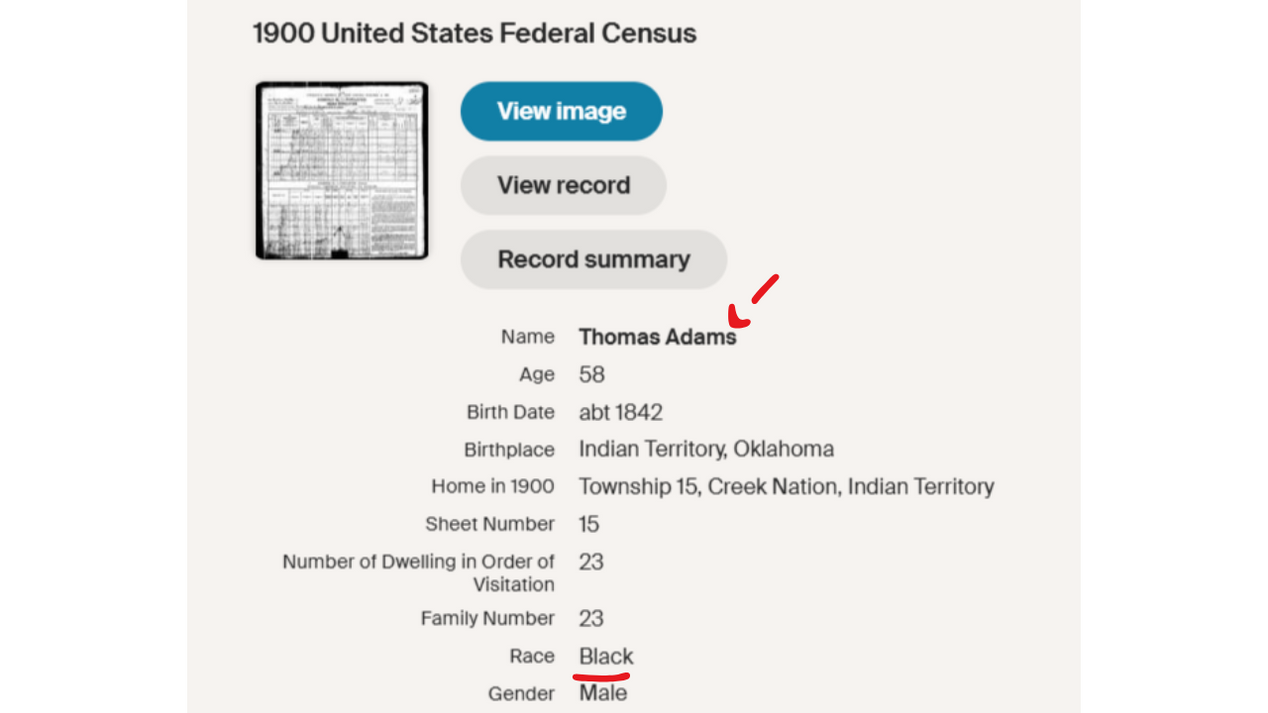
1900 US Census
But then, take a look at the second image:
📄 That’s the federal census record from just a few years later.
Same ancestor.
Same location.
But this time, the government marked them as Negro.
No tribe. No Indian classification.
Just folded into the general Black population—without consent, without explanation.
That wasn’t a mistake.
That was paper genocide.
This is what happened to millions of Indigenous Black Americans across the South.
Their identities were stripped away on paper—one document at a time—by a system designed to erase, absorb, and exploit.
This wasn’t just about racism. It was about land, power, and control.
By reclassifying tribal people as Negro or Colored, the government could:
-
Deny them land rights
-
Remove them from tribal rolls
-
Steal their inheritance
-
And make sure future generations never knew who they really were
This is why so many of our elders say, “My grandma said we had Indian in us.”
They weren’t lying.
They just didn’t have the tools to prove it.
Now we do.
And I’m not showing you this to just share my story—I’m showing you because this might be your story, too.
If you’re ready to go deeper, tomorrow I’m going to pull back the curtain on how far this went—how the reclassification of Black Indians was not an exception, but the rule across the Southeast.
You’re not crazy.
You’re not reaching.
You’re remembering.
—Mike
Founder, Native Black Ancestry
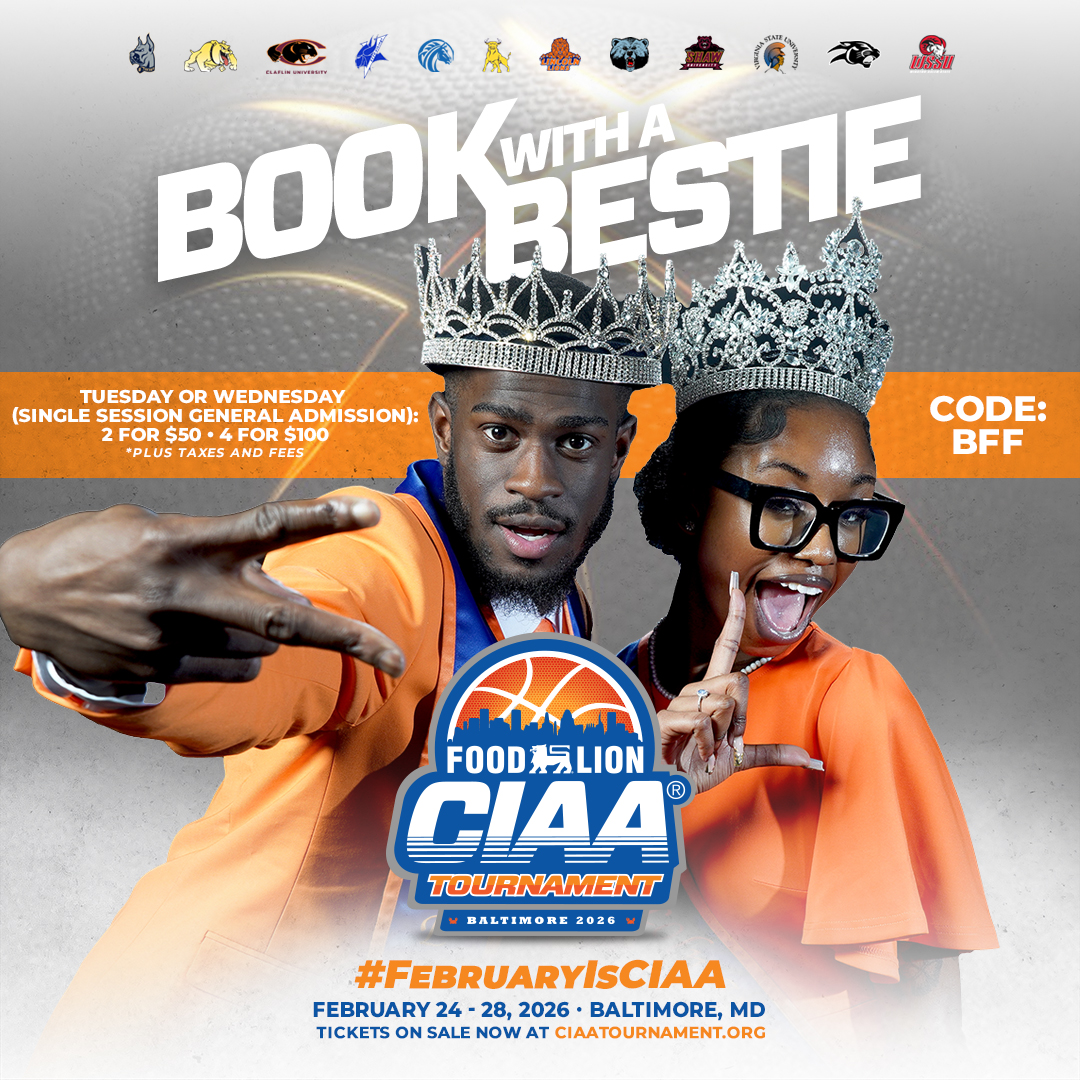

The Black Press Is Not Dying — It’s Being Rebuilt

Remember Who You Are: The Indigenous Series 📱

Remember Who You Are: The Indigenous Series

Indigenous Series: Reclaiming Our Legacy 📱

Indigenous Series: Reclaiming Our Legacy
Remember Who You Are: The Indigenous Series
Remember Who You Are: The Indigenous Series 📱
Indigenous Series: Reclaiming Our Legacy
Indigenous Series: Reclaiming Our Legacy 📱

Indigenous Series: Save Our Legacy 📱
-
 HBCU8 months ago
Lincoln University’s Vice President and General Counsel Venus D. Boston Appointed to National Legal Board
-
 Videos3 years ago
Marsha Jews Interview
-
 Videos3 years ago
Emmy-nominated Doni Glover Show: Richard Elliott & Martin Mitchell
-

 Videos1 year ago
New Life Recovery Program: Rev. Terry Thornton
-
 Videos3 years ago
Prof. Larry Gibson Interview
-
 Videos2 years ago
Date 'Em ALL Sis! – Tonight's Topic: Goals, Dreams & Aspirations for the new you!
-
 Videos3 years ago
Emmy-nominated Doni Glover Show: Adrian Harpool and MBE
-
 Videos3 years ago
Emmy-nominated Doni Glover Show: Kevin Carr, Pres. of Coppin Alumni