













Business
Amazon to Buy Maker of the Roomba for $1.7 Billion

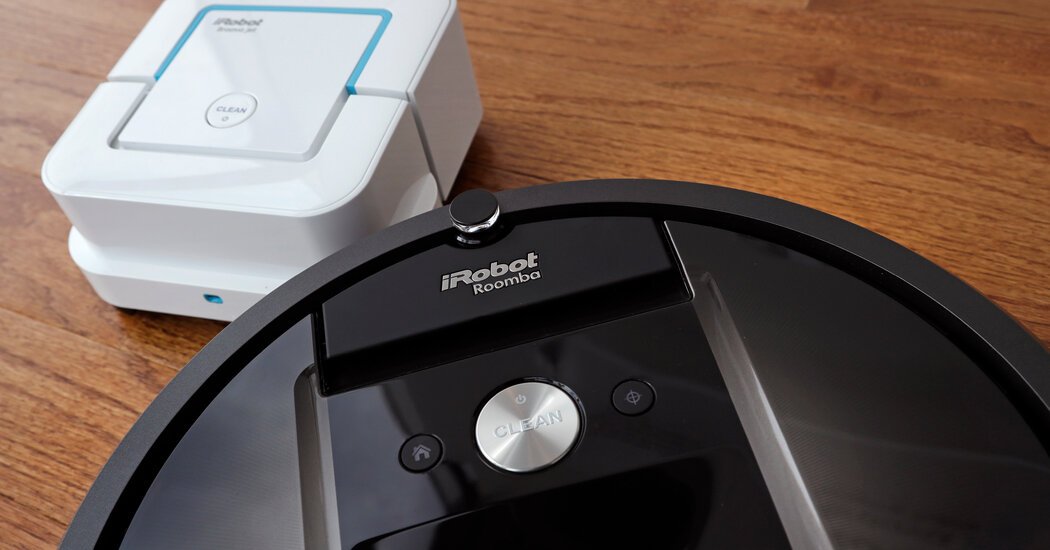

Hey, Alexa, tell Roomba to vacuum the bedroom.
Amazon announced on Friday that it had reached an agreement to buy iRobot Corp., the maker of the Roomba robotic vacuum, for $1.7 billion, adding to its growing roster of smart home products.
“We know that saving time matters, and chores take precious time that can be better spent doing something that customers love,” Dave Limp, senior vice president of Amazon Devices, said in a statement announcing the acquisition.
Amazon will acquire iRobot, including its debt, for $61 per share in an all-cash transaction, according to the statement. The purchase would be Amazon’s fourth-largest acquisition after the company bought Whole Foods for $13.7 billion in 2017 and the movie studio MGM for $8.5 billion last year. Last month, Amazon announced a foray into medical services with an agreement to spend $3.9 billion to acquire One Medical, a chain of primary care clinics around the United States.
The Roomba and iRobot’s other cleaning devices, including robotic mops and air purifiers, join a portfolio of Amazon-owned smart home devices that includes Ring doorbells and Alexa, Amazon’s virtual assistant and speaker. iRobot also makes an educational robot called Root that allows children to experiment with coding.
The Roomba first hit dirty floors in 2002, to the delight of lazy people and the bemusement of pets, particularly cats. The New York Times described it as “easy, effective and fun,” and a product that quickly became “a member of the household.”
The $200 early version struggled around corners and chair legs, even falling down stairs. But 20 years later, the Roomba j7 can, according to the company, recognize over 80 common objects (including cords and pet waste), returns to its dock once its chores are complete and then empties itself. The most expensive option sells for $999.99.
While iRobot is best known for its roving cleaning equipment, the technology powering these tools is also sucking up troves of spatial data used to map users’ homes. Some digital rights groups have expressed concern that this data could help companies like Amazon find out information about the size of homes and even their contents, right down to the brand.
iRobot reported $255.4 million in revenue in the second quarter of 2022, a 30 percent decrease over the previous year. Amazon reported $121.2 billion in revenue in the second quarter, up 7.2 percent from a year earlier but down slightly from the 7.3 percent revenue growth it reported in the first quarter of this year. It was Amazon’s slowest growth in more than two decades after the company began to come down from its high pandemic demands.
Read the full article here




(RICHMOND – February 23, 2026) – Black-owned newspapers are disappearing before our eyes.
Historic institutions that once carried our stories, defended our dignity, and documented our victories are folding across the country. Newsrooms that anchored neighborhoods for generations are going quiet. Seniors who relied on the printed word are now being forced into a digital world that did not wait for them.
This is not just a Black problem. It is not even just an American problem. It is global.
Technology disrupted everything.
We once used pagers. Then cell phones replaced them. House phones became optional. Now news lives in the palm of your hand. A single influencer with a smartphone can reach more people in seconds than a newsroom once could in a week.
The game changed.
Years ago, The Baltimore Sun recruited me to blog for them. Soon after, their reporters were required to shoot video on their phones. The thing is — I had already been doing that. Innovation wasn’t new to us. We were early.
But disruption leaves casualties.
When a Black newspaper closes, something more than a business disappears. Institutional memory vanishes. Accountability weakens. Community narrative shifts into someone else’s hands.
That void is dangerous.
That is why we built BlackUSA.News.
Not as nostalgia.
Not as resistance to change.
But as adaptation with intention.
I have worked in the Black Press since 1994. I have seen what happens when we control our story — and what happens when we don’t.
BlackUSA.News is our answer to this moment.
We are not watching the Black Press die.
We are rebuilding it — digitally, nationally, unapologetically.
And we welcome all who are ready to build with us.
(OKLAHOMA – August 17, 2025) – When I first started researching my family’s genealogy, I thought I was just going to fill in a few blanks.
Instead, I uncovered a lie so deep, so systematic, it reshaped everything I thought I knew about who we are as a people.
I want to show you something personal.
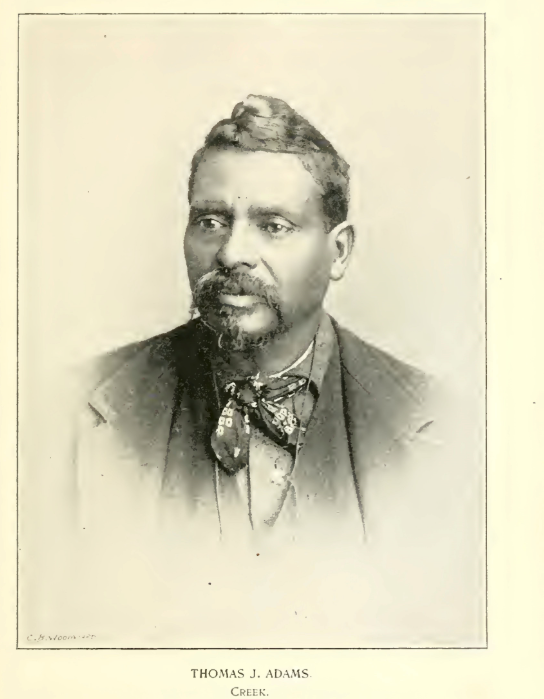
Below, you’ll see two official U.S. government records—both documenting one of my direct ancestors. Thomas Jefferson Adams Harjo.
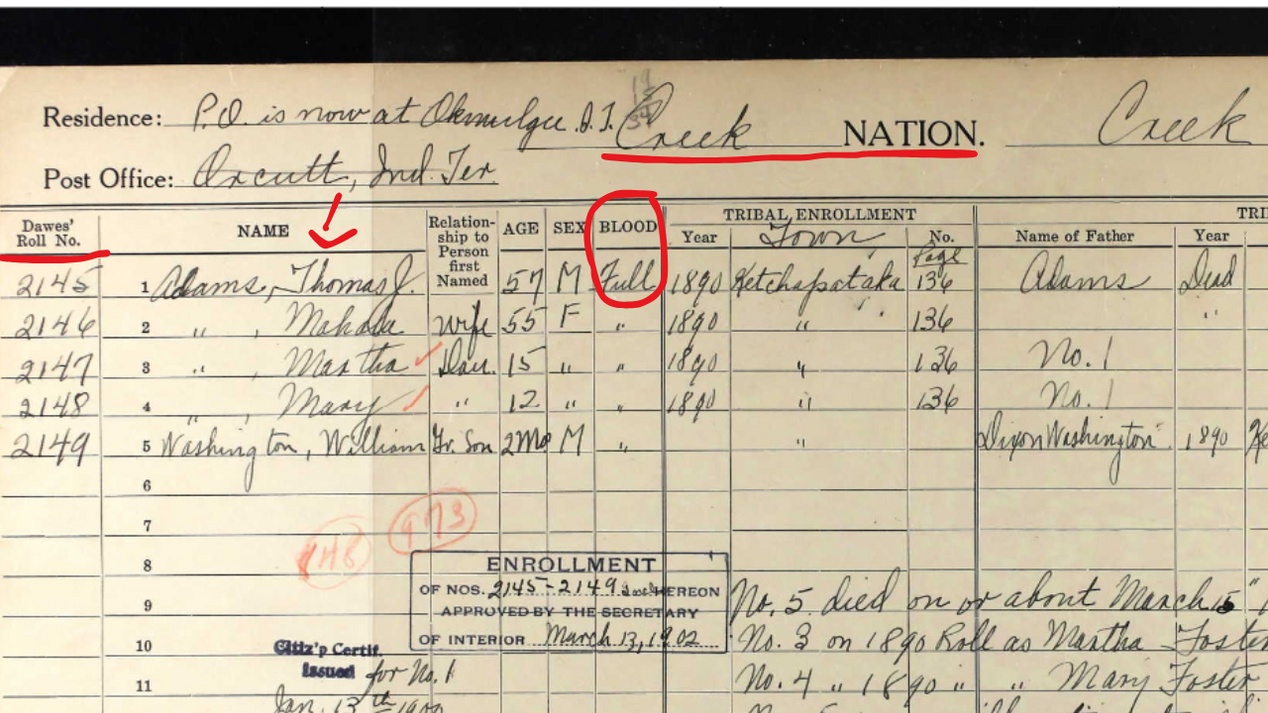
Creek Nation certificate
📜 The first is from the Dawes Roll, the federal list created in the early 1900s to register members of the Five Civilized Tribes.
As you’ll see, my ancestor is listed as a Full-Blood Indian—a clear acknowledgment of their tribal heritage and cultural identity.
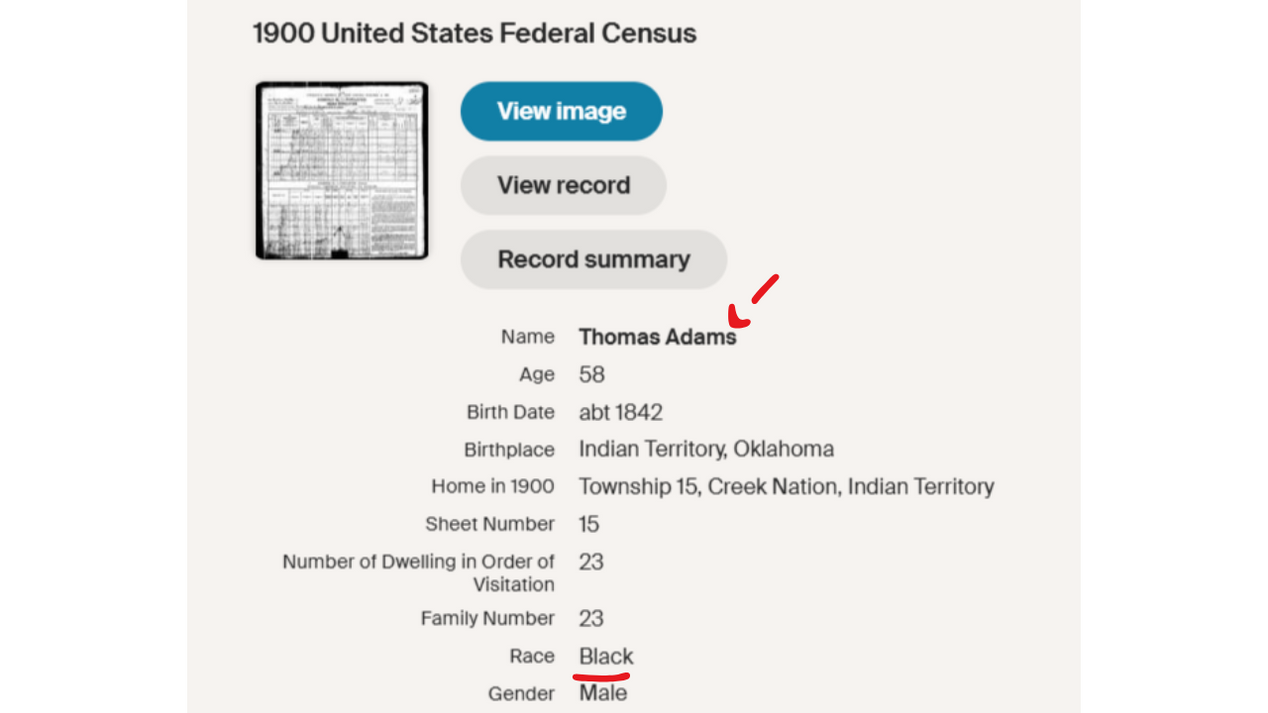
1900 US Census
But then, take a look at the second image:
📄 That’s the federal census record from just a few years later.
Same ancestor.
Same location.
But this time, the government marked them as Negro.
No tribe. No Indian classification.
Just folded into the general Black population—without consent, without explanation.
That wasn’t a mistake.
That was paper genocide.
This is what happened to millions of Indigenous Black Americans across the South.
Their identities were stripped away on paper—one document at a time—by a system designed to erase, absorb, and exploit.
This wasn’t just about racism. It was about land, power, and control.
By reclassifying tribal people as Negro or Colored, the government could:
-
Deny them land rights
-
Remove them from tribal rolls
-
Steal their inheritance
-
And make sure future generations never knew who they really were
This is why so many of our elders say, “My grandma said we had Indian in us.”
They weren’t lying.
They just didn’t have the tools to prove it.
Now we do.
And I’m not showing you this to just share my story—I’m showing you because this might be your story, too.
If you’re ready to go deeper, tomorrow I’m going to pull back the curtain on how far this went—how the reclassification of Black Indians was not an exception, but the rule across the Southeast.
You’re not crazy.
You’re not reaching.
You’re remembering.
—Mike
Founder, Native Black Ancestry

N.C. A&T to Host 100th Greatest Homecoming on Earth Virtual News Conference on Friday
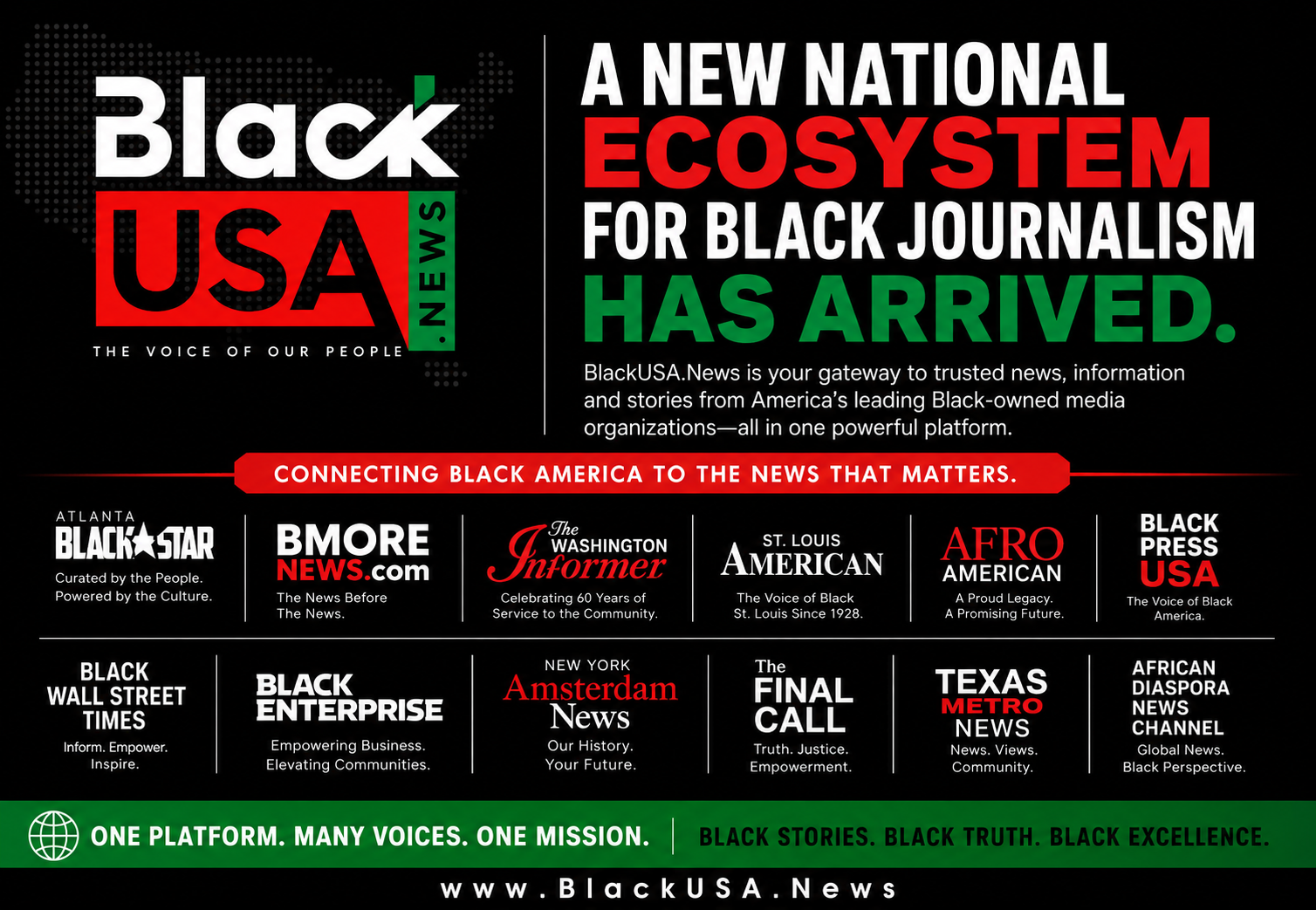
BlackUSA.News Unveils New National Platform Connecting Readers to America’s Leading Black Media

Gospel Legend Calvin Bridges Celebrates 50 Years of ‘I Can Go to God in Prayer,’ a Song That Helped Shape Black Gospel Music

Crawford Family Donates $2 Million to Spelman and Morehouse to Expand Opportunity for HBCU Students

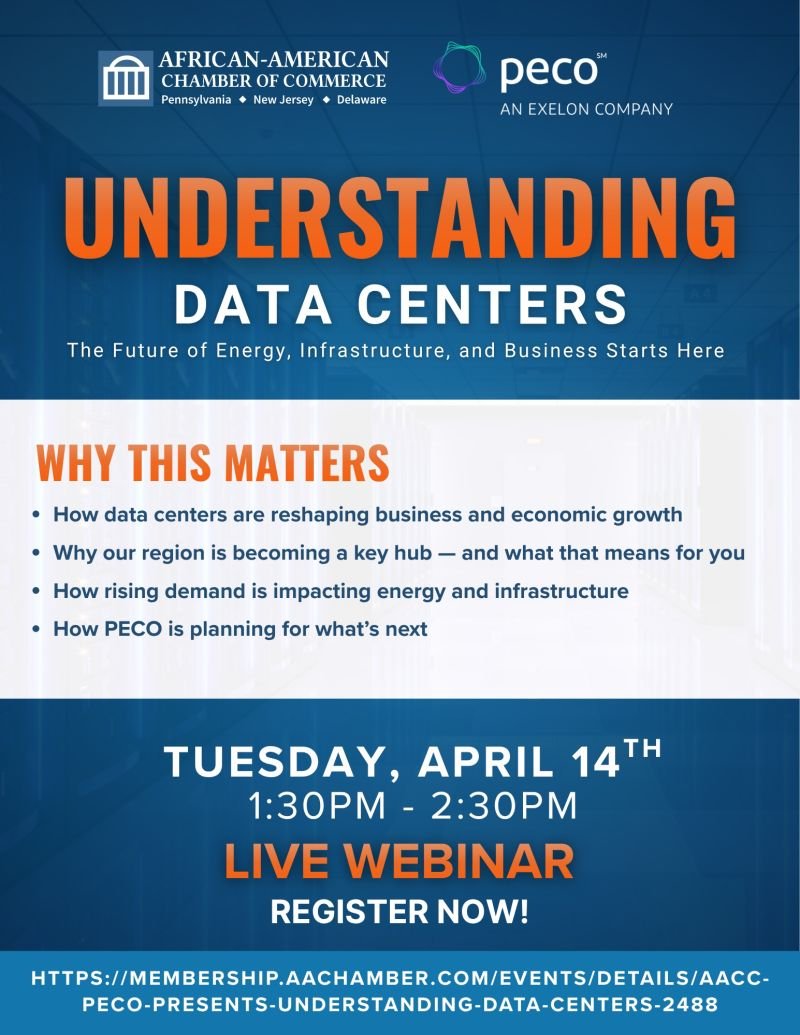
Data Centers Got You Down? The African American Chamber of Commerce Has Answers!

Remember Who You Are: The Indigenous Series

Remember Who You Are: The Indigenous Series 📱

Indigenous Series: Reclaiming Our Legacy

Indigenous Series: Reclaiming Our Legacy 📱

Indigenous Series: Save Our Legacy 📱
-

 HBCU1 year ago
Lincoln University’s Vice President and General Counsel Venus D. Boston Appointed to National Legal Board
-

 Videos2 years ago
New Life Recovery Program: Rev. Terry Thornton
-
 Videos2 years ago
New Life Recovery Show: Bro. Curtis Warren, Brothers Helping Brothers
-
 News12 months ago
Voices of West Tampa: District 5 Special Election Forum, Aug. 27th
-

 Videos2 years ago
Emmy-nominated Doni Glover Show: Serial Entrepreneur Lance London
-
 Videos3 years ago
Emmy-nominated Doni Glover Show: NC's Dr. Eric Kelly
-
 Videos2 years ago
Emmy-nominated Doni Glover Show: Barry Williams for Balto. Co. Exec
-

 Videos3 years ago
WHAT IS THE PLANT PROTOCOL?™?