
























Entertainment
Gospel Legend Calvin Bridges Celebrates 50 Years of ‘I Can Go to God in Prayer,’ a Song That Helped Shape Black Gospel Music



(CHICAGO – July 2, 2026) — Few songs endure for half a century. Fewer still become woven into the fabric of Black church life.
This year, legendary gospel songwriter, composer, and recording artist Calvin Bridges is celebrating the 50th anniversary of “I Can Go to God in Prayer,” the beloved gospel classic that has inspired generations of worshippers across the United States and around the world.
Written in 1976, the song was born during a deeply personal moment of ministry.
Bridges recalls receiving a call from a choir member whose father had just been diagnosed with cancer.
“She was crying because her father had just been diagnosed with cancer,” Bridges said. “The first thing I did—the only thing I knew to do—was pray.”
As they prayed together, fear gave way to faith.
“Our tears became shouts of praise as we realized that, whatever the outcome, God was going to see her father through.”
Still moved by the experience, Bridges sat at the piano. Within minutes, he says, the Holy Spirit inspired what would become one of the most enduring songs in traditional gospel music.
That song soon found its way to gospel pioneer Albertina Walker, who recorded it with the Lighthouse Baptist Church Choir of Chicago. The recording became one of Walker’s signature selections and introduced the composition to audiences far beyond Chicago.
Over the next five decades, “I Can Go to God in Prayer” would travel the world.
The song has been recorded and performed by artists including the Brooklyn Tabernacle Choir, Ann Nesby, Luciano Pavarotti with the Boys Choir of Harlem, the Oslo Gospel Choir, Corey Henry and Alicia Keys, who performed the song as a child during her 2009 world tour.
According to The Mechanical Licensing Collective, more than 300 recording licenses have been issued for “I Can Go to God in Prayer,” reflecting its remarkable reach across generations, denominations, and continents.
Among its most significant honors is its preservation by Smithsonian Folkways Recordings, ensuring that future generations will be able to experience one of the defining works of traditional Black gospel music. The archived version was recorded by The Johnson Extension, a family-led gospel choir based in New Orleans.
To commemorate the milestone, Bridges has released a 50th Anniversary Tribute Video featuring memorable performances from throughout the song’s history, including Albertina Walker’s appearance on the PBS special Going Home to Gospel alongside Patti LaBelle, a performance before a 400-voice choir at Germany’s POGO Music Festival, and an orchestral presentation at Chicago’s Millennium Park.
For Bridges, however, the song’s greatest legacy has never been measured by awards or accolades.
Instead, it has been measured by the countless people who have turned to it during moments of grief, uncertainty, healing, and hope.
“I thank God, Gospel radio, and Gospel music lovers around the world for giving me the privilege of sharing the message of traditional Gospel music with the nations,” Bridges said. “For more than 30 years, I’ve been blessed to travel and sing about the joy of knowing, serving, and loving Jesus Christ. Gospel music lives forever—and there’s no God like our God.”
As Black America continues to preserve and celebrate its rich cultural legacy, “I Can Go to God in Prayer” stands as more than a beloved hymn. It is part of a living tradition—one that has strengthened churches, inspired choirs, and reminded generations that faith remains a powerful source of hope.



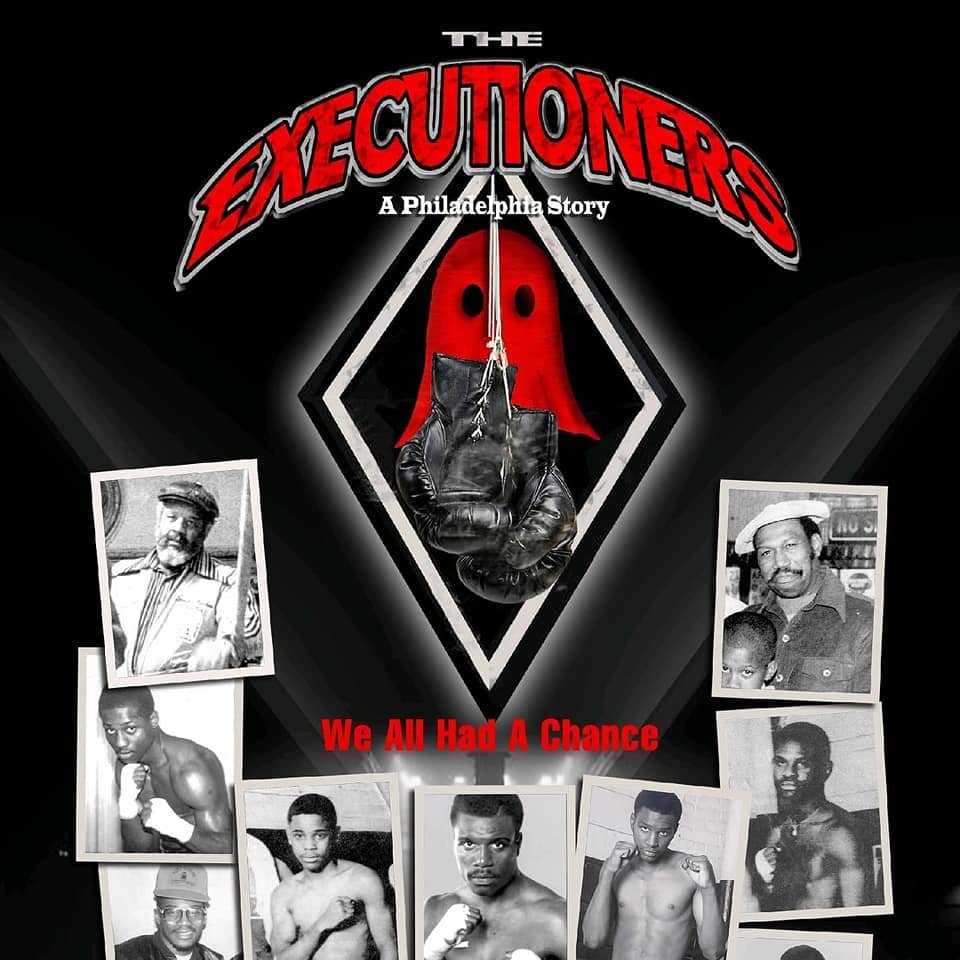
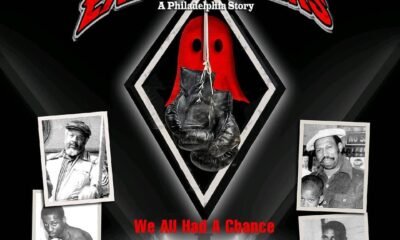
(PHILADELPHIA – August 10, 2025) — In October 2022, BlackUSA.News sat down with comedian and filmmaker Dannon Green to talk about his powerful documentary The Executioners: We All Had A Chance. Now, the award-winning film is streaming on Tubi, bringing the untold story of one of Philadelphia’s greatest amateur boxing teams to audiences worldwide.
The documentary is the first ever to focus on a boxing team rather than an individual fighter. It tells the true story of two men — Frank Taylor and the late Marvin “Toochie” Gordon — who opened a boxing gym in early 1970s West Philadelphia to give neighborhood kids an alternative to joining street gangs. Located at 60th and Vine Streets, the gym became a safe haven in a city where gang violence was rampant.
“These men gave us safe passage,” Taylor recalls in the film. “If you were an Executioner, you could walk through dangerous neighborhoods without trouble — because everyone respected what we stood for.”
The gym produced an extraordinary roster of young fighters, including future legends like Bernard Hopkins, Mark Breland, Buddy McGirt, Sam Watson, and Shann Mosley. But for Green, who joined the Executioners at just 14 years old, the story was always about more than boxing.
“People don’t understand what the gym did for us as young kids,” Green said. “In my short two years there, it carried on for my whole life. If I didn’t have this, I don’t know where I would’ve been.”
Now based in Los Angeles, Green is an acclaimed filmmaker — but The Executioners is his most personal work yet. Through rare footage, heartfelt interviews, and gritty archival material, the documentary captures the triumphs and tragedies of a brotherhood forged in the ring.
“This is where it started,” Green says in the film. “What we learned there was enough for us to move in a different direction. And I hope it inspires kids today to see that there’s always another path.”
The Executioners: We All Had A Chance is now available to stream free on Tubi in English with subtitles.

5 OUT OF 5 STARS 🌟🌟🌟🌟🌟
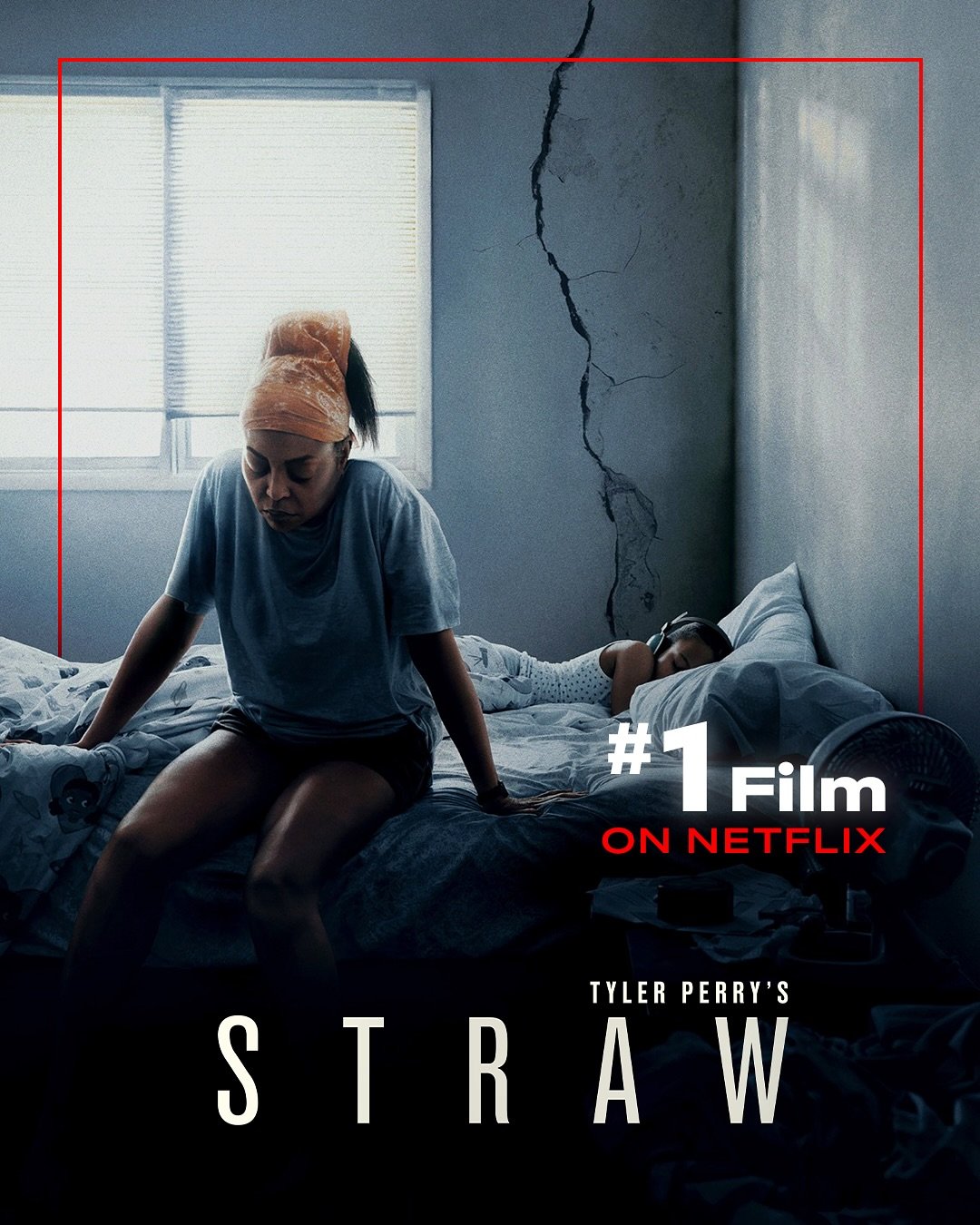
(ATLANTA – July 20, 2025) – Since Roots, we haven’t witnessed such flawless casting in an American film—until Straw. Tyler Perry’s 2025 drama delivers a masterclass in character-driven storytelling, led by the incomparable Taraji P. Henson.
Henson’s portrayal of Janiyah Watkinson is nothing short of perfection. She is the emotional anchor of the film—grounded, powerful, and unnervingly real. Her performance leaves viewers deep in discussion, grappling with questions the film leaves deliberately unresolved. Chief among them: Is Aria, Janiyah’s daughter, actually alive? Or is she a figment of Janiyah’s troubled mind? The ambiguity surrounding Aria’s presence elevates Straw beyond typical moviegoing fare—it becomes a conversation.
The film’s structure is poetic. The final scene mirrors the opening, both featuring Janiyah and Aria in bed. This cyclical storytelling, reminiscent of Tupac’s approach to narrative symmetry, keeps the focus razor-sharp and the audience engaged.
Every performance in Straw holds weight. Sherri Shepherd, playing Nicole Parker, the poised and complex bank manager, delivers a career-defining performance. Her scenes aren’t flashy, but they carry immense dramatic weight and intrigue. I often catch Shepherd on her talk show, “Sherri,” yet I didn’t even recognize her until the end of her arc. That’s how deeply she disappeared into this role.
Teyana Taylor as Detective Kay Raymond is another standout. In one of the film’s most surprising and entertaining scenes, she lands a clean left hook on a fellow officer who had harassed Janiyah earlier—both cathartic and unforgettable. Taylor’s commanding presence proves Straw is not playing around.
Critics may claim Tyler Perry’s films tend to follow a familiar formula, but Straw breaks the mold. This is no comedy. It’s a tightly woven psychological drama—free from sex scenes, overused gunplay, gratuitous violence, or flashy car chases. Perry strips it down to raw emotion, taut dialogue, and deeply human performances.
And the cast? Untouchable.
Henson. Shepherd. Taylor. Every actor was perfectly selected. It’s rare to see such cohesion and excellence in a single ensemble. I hadn’t seen “Detective Raymond” since Teyana’s 2018 collaboration with Ghostface Killah sampling The Delfonics’ 1968 classic “For the Love I Give to You,” but she’s come back swinging—literally.
Straw deserves every major award and accolade coming its way. It’s already the best film of 2025 in my eyes. A triumph in storytelling, casting, and restraint.
This one’s a masterpiece.
STR⭐️W = STARS.
Entertainment
Black August Film Festival Returns to Pasadena, Honoring Black Resistance Through Cinema


Deadline Aug. 5: Center for Black Entrepreneurship Opens Paid Internship Program for AUC Students

N.C. A&T to Host 100th Greatest Homecoming on Earth Virtual News Conference on Friday

BlackUSA.News Unveils New National Platform Connecting Readers to America’s Leading Black Media

Gospel Legend Calvin Bridges Celebrates 50 Years of ‘I Can Go to God in Prayer,’ a Song That Helped Shape Black Gospel Music

Crawford Family Donates $2 Million to Spelman and Morehouse to Expand Opportunity for HBCU Students

Remember Who You Are: The Indigenous Series

Remember Who You Are: The Indigenous Series 📱

Indigenous Series: Reclaiming Our Legacy

Indigenous Series: Reclaiming Our Legacy 📱

Indigenous Series: Save Our Legacy 📱
-

 News1 year ago
Voices of West Tampa: District 5 Special Election Forum, Aug. 27th
-

 HBCU1 year ago
Lincoln University’s Vice President and General Counsel Venus D. Boston Appointed to National Legal Board
-

 Videos2 years ago
New Life Recovery Program: Rev. Terry Thornton
-
 Videos2 years ago
New Life Recovery Show: Bro. Curtis Warren, Brothers Helping Brothers
-

 Videos2 years ago
Emmy-nominated Doni Glover Show: Serial Entrepreneur Lance London
-
 Videos2 years ago
Emmy-nominated Doni Glover Show: Barry Williams for Balto. Co. Exec
-

 Black Wall Street1 year ago
Mandy Bowman and the Rise of Black Women in Business: A Testament to Tenacity and Transformation
-
 Videos2 years ago
Emmy-nominated Doni Glover Show: Pastor Robert Turner, Empowerment Temple