















Business
California Regulator Accuses Tesla of Falsely Advertising Autopilot



California’s Department of Motor Vehicles has accused Tesla of falsely advertising its driver-assistance technology in two complaints that could affect the company’s ability to sell cars in the state.
The agency said Tesla had misled customers by claiming in advertisements that vehicles equipped with its Autopilot and Full Self-Driving Capability programs were autonomous. If the agency’s complaints to the state’s Office of Administrative Hearings succeed, Tesla’s licenses to make and sell vehicles in California could be suspended or revoked.
Tesla “made or disseminated statements that are untrue or misleading, and not based on facts, in advertising vehicles as equipped, or potentially equipped, with advanced driver assistance system (ADAS) features,” the agency said in its complaints, which were filed on July 28.
The Los Angeles Times reported earlier on the agency’s complaints, which are separate from its review of Tesla’s vehicle designs and technological abilities.
Tesla’s chief executive, Elon Musk, and a company lawyer did not immediately respond to a request for comment on Friday evening.
Read More on Electric Vehicles
As the overall auto market stagnates, the popularity of battery-powered cars is soaring worldwide.
In marketing materials on its website, Tesla said its driver-assistance technology was capable of conducting trips “with no action required by the person in the driver’s seat.” Despite Tesla’s disclaimer that the programs “require active driver supervision,” the claim and others were false and misleading, the agency said.
Available since 2015, Autopilot is a system that can steer, brake and accelerate the company’s cars on its own. But it is designed mainly for use on highways, and the company’s documentation requires drivers to keep their hands on the wheel and take control of the car should the system malfunction.
Its name is borrowed from aviation systems that allow planes to fly themselves in ideal conditions with limited pilot input. With the current system, the car will disengage Autopilot if drivers do not consistently keep a hand on the wheel.
For the typical buyer, the added features are minimal. When they are used on city streets, for instance, the car will stop at a red light, but it will not progress after a green light unless the driver intervenes.
In May, Mr. Musk said about 100,000 Full Self-Driving buyers had access to a “beta” test version of the service that could navigate city streets more extensively — while drivers continued to keep their hands on the wheel in case anything went wrong. He also said Full Self-Driving would be “feature complete” by the end of the year and available to about a million car owners.
At the end of 2015, the year Autopilot debuted, Mr. Musk began saying Teslas would drive themselves within two years. In the years since, he has repeatedly claimed that such an ability was just a year or two away.
“There are just so many false dawns with self-driving,” he said in May. “You think you have a handle on the problem and then — nope — it turns out you just hit a ceiling.”
The National Highway Traffic Safety Administration, the country’s leading auto safety regulator, is investigating Autopilot after becoming aware of 35 crashes involving the system, including nine that resulted in 14 deaths. Its investigation covers 830,000 vehicles sold in the United States and will look at Full Self-Driving as well as Autopilot.
Tesla has until next Friday to dispute or otherwise respond to the California Department of Motor Vehicles’ accusations.
Read the full article here




Business
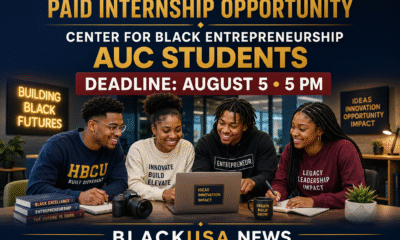
Deadline Aug. 5: Center for Black Entrepreneurship Opens Paid Internship Program for AUC Students

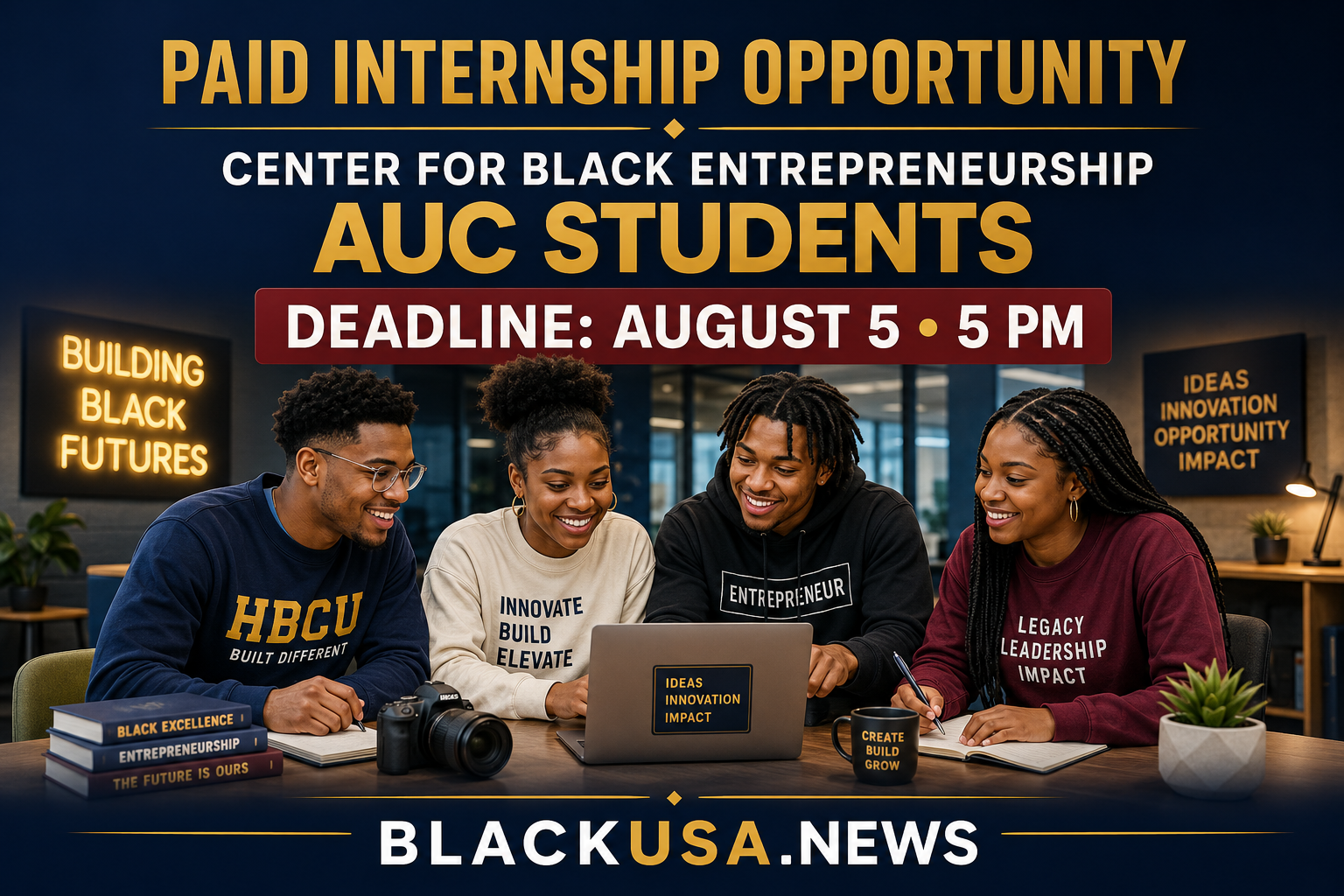
(ATLANTA — August 3, 2026) — The Center for Black Entrepreneurship is accepting applications for its 2026–2027 Paid Internship Program, offering students across the Atlanta University Center an opportunity to gain hands-on professional experience while supporting programs designed to empower entrepreneurs.
The internship program is open to eligible students attending Spelman College, Morehouse College, Clark Atlanta University and Morris Brown College.
Available internship opportunities include:
- Marketing and social media
- Photography and videography
- Administrative operations
Selected interns will work alongside Center for Black Entrepreneurship staff and industry partners while gaining real-world experience in entrepreneurship, marketing, event management, operations and program administration. Interns will also have opportunities to strengthen their professional skills, expand their networks and contribute to events and initiatives serving the AUC community.
Who Is Eligible?
Applicants must:
- Be a sophomore, junior or senior
- Be currently enrolled at Spelman College, Morehouse College, Clark Atlanta University or Morris Brown College
- Maintain a minimum cumulative GPA of 2.75
- Attend mandatory team meetings on Mondays at 6:30 p.m. and Thursdays beginning at 5 p.m.
- Be available for occasional evening and weekend events
- Commit approximately 10 to 15 hours per week throughout the academic year
Required Application Materials
Students should be prepared to submit:
- A résumé
- A professional biography of at least 200 words
- An official or unofficial transcript
- One letter of recommendation
- A portfolio or work samples for photography and videography or marketing and social media positions
The deadline to apply is Wednesday, August 5, 2026, at 5 p.m.
With the deadline quickly approaching, interested and eligible students are encouraged to gather their materials and submit their applications as soon as possible.
The Center for Black Entrepreneurship is a collaborative initiative serving the Atlanta University Center and working to strengthen the pipeline of Black entrepreneurs through education, mentorship, professional development and access to entrepreneurial resources.
APPLY
(RICHMOND – February 23, 2026) – Black-owned newspapers are disappearing before our eyes.
Historic institutions that once carried our stories, defended our dignity, and documented our victories are folding across the country. Newsrooms that anchored neighborhoods for generations are going quiet. Seniors who relied on the printed word are now being forced into a digital world that did not wait for them.
This is not just a Black problem. It is not even just an American problem. It is global.
Technology disrupted everything.
We once used pagers. Then cell phones replaced them. House phones became optional. Now news lives in the palm of your hand. A single influencer with a smartphone can reach more people in seconds than a newsroom once could in a week.
The game changed.
Years ago, The Baltimore Sun recruited me to blog for them. Soon after, their reporters were required to shoot video on their phones. The thing is — I had already been doing that. Innovation wasn’t new to us. We were early.
But disruption leaves casualties.
When a Black newspaper closes, something more than a business disappears. Institutional memory vanishes. Accountability weakens. Community narrative shifts into someone else’s hands.
That void is dangerous.
That is why we built BlackUSA.News.
Not as nostalgia.
Not as resistance to change.
But as adaptation with intention.
I have worked in the Black Press since 1994. I have seen what happens when we control our story — and what happens when we don’t.
BlackUSA.News is our answer to this moment.
We are not watching the Black Press die.
We are rebuilding it — digitally, nationally, unapologetically.
And we welcome all who are ready to build with us.

Deadline Aug. 5: Center for Black Entrepreneurship Opens Paid Internship Program for AUC Students

N.C. A&T to Host 100th Greatest Homecoming on Earth Virtual News Conference on Friday
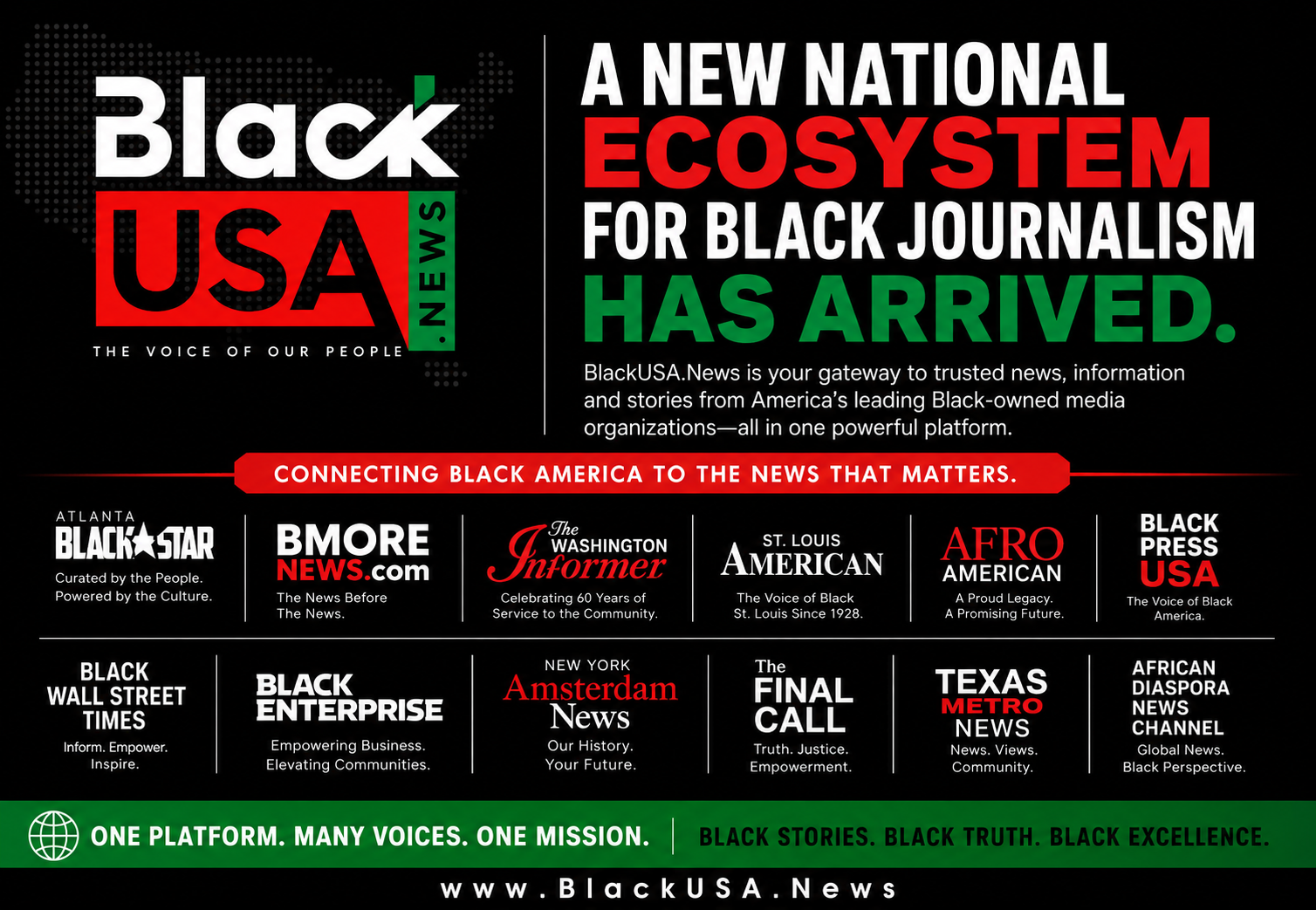
BlackUSA.News Unveils New National Platform Connecting Readers to America’s Leading Black Media

Gospel Legend Calvin Bridges Celebrates 50 Years of ‘I Can Go to God in Prayer,’ a Song That Helped Shape Black Gospel Music

Crawford Family Donates $2 Million to Spelman and Morehouse to Expand Opportunity for HBCU Students

Remember Who You Are: The Indigenous Series

Remember Who You Are: The Indigenous Series 📱

Indigenous Series: Reclaiming Our Legacy

Indigenous Series: Reclaiming Our Legacy 📱

Indigenous Series: Save Our Legacy 📱
-
 News1 year ago
Voices of West Tampa: District 5 Special Election Forum, Aug. 27th
-
 HBCU1 year ago
Lincoln University’s Vice President and General Counsel Venus D. Boston Appointed to National Legal Board
-

 Videos2 years ago
New Life Recovery Program: Rev. Terry Thornton
-
 Videos2 years ago
New Life Recovery Show: Bro. Curtis Warren, Brothers Helping Brothers
-

 Videos2 years ago
Emmy-nominated Doni Glover Show: Serial Entrepreneur Lance London
-
 Videos2 years ago
Emmy-nominated Doni Glover Show: Barry Williams for Balto. Co. Exec
-

 Black Wall Street1 year ago
Mandy Bowman and the Rise of Black Women in Business: A Testament to Tenacity and Transformation
-
 Videos2 years ago
Emmy-nominated Doni Glover Show: Pastor Robert Turner, Empowerment Temple